
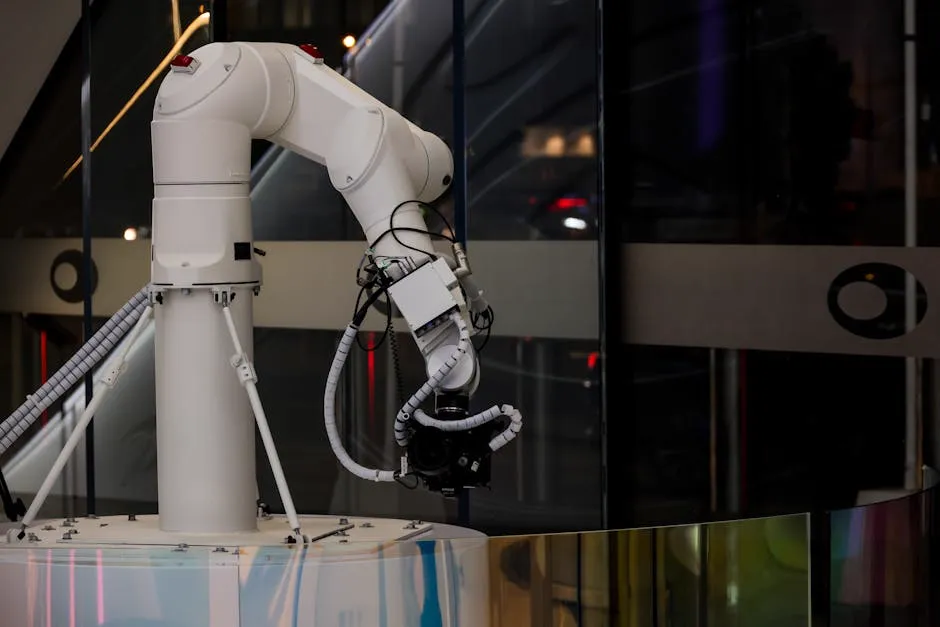
استراتيجية الذكاء الاصطناعي للمؤسسات: دليل التحول الرقمي
أصبح الذكاء الاصطناعي أداة حاسمة للشركات لتحقيق ميزة تنافسية. في هذا الدليل، نستعرض الخطوات اللازمة لإنشاء استراتيجية ذكاء اصطناعي للمؤسسات.
تقييم نضج الذكاء الاصطناعي
مستويات النضج
| المستوى | الوصف | الخصائص |
|---|---|---|
| 1 - ابتدائي | الوعي بالذكاء الاصطناعي | مشاريع تجريبية، تجارب |
| 2 - متطور | تطبيقات أولية | حلول على مستوى الأقسام |
| 3 - مُعرّف | دمج العمليات | معايير مؤسسية |
| 4 - مُدار | ذكاء اصطناعي قابل للتوسع | MLOps، الحوكمة |
| 5 - مُحسّن | ثقافة الذكاء الاصطناعي أولاً | ابتكار مستمر |
إطار التقييم
1┌─────────────────────────────────────────────────────┐
2│                 AI Maturity Matrix                  │
3├─────────────────┬───────────────────────────────────┤
4│    Dimension    │  1    2    3    4    5           │
5├─────────────────┼───────────────────────────────────┤
6│ Strategy        │  □    □    ■    □    □           │
7│ Data            │  □    □    □    ■    □           │
8│ Technology      │  □    ■    □    □    □           │
9│ Talent          │  □    □    ■    □    □           │
10│ Organization    │  □    ■    □    □    □           │
11│ Ethics/Governance│ ■    □    □    □    □           │
12└─────────────────┴───────────────────────────────────┘
تحديد حالات الاستخدام
تحليل الفرص
1class UseCaseEvaluator:
2    def __init__(self):
3        self.criteria = {
4            "business_impact": {"weight": 0.25, "max": 10},
5            "feasibility": {"weight": 0.20, "max": 10},
6            "data_availability": {"weight": 0.15, "max": 10},
7            "strategic_alignment": {"weight": 0.15, "max": 10},
8            "time_to_value": {"weight": 0.15, "max": 10},
9            "risk": {"weight": 0.10, "max": 10}
10        }
11
12    def evaluate(self, use_case: dict) -> dict:
13        total_score = 0
14        breakdown = {}
15
16        for criterion, config in self.criteria.items():
17            score = use_case.get(criterion, 0)
18            weighted = score * config["weight"]
19            total_score += weighted
20            breakdown[criterion] = {
21                "raw": score,
22                "weighted": weighted
23            }
24
25        return {
26            "use_case": use_case["name"],
27            "total_score": total_score,
28            "breakdown": breakdown,
29            "priority": self.get_priority(total_score)
30        }
31
32    def get_priority(self, score: float) -> str:
33        if score >= 8:
34            return "high"
35        elif score >= 5:
36            return "medium"
37        else:
38            return "low"
أهم حالات استخدام الذكاء الاصطناعي
-
خدمة العملاء
- روبوتات المحادثة والمساعدون الافتراضيون
- التصنيف التلقائي للتذاكر
- تحليل المشاعر
-
الكفاءة التشغيلية
- معالجة المستندات
- أتمتة تدفق العمل
- الصيانة التنبؤية
-
المبيعات والتسويق
- تقييم العملاء المحتملين
- التوصيات المخصصة
- التنبؤ بخسارة العملاء
-
المالية والمخاطر
- كشف الاحتيال
- تقييم الجدارة الائتمانية
- مراقبة الامتثال
إنشاء خارطة طريق للذكاء الاصطناعي
النهج المرحلي
1Phase 1: Foundation (0-6 months)
2├── Data infrastructure setup
3├── Building AI team
4├── Pilot project selection
5└── Governance framework
6
7Phase 2: Pilot (6-12 months)
8├── 2-3 pilot projects
9├── Technical architecture
10├── Initial ROI measurements
11└── Lessons learned
12
13Phase 3: Scale (12-24 months)
14├── Production deployment
15├── MLOps setup
16├── Expanding organization
17└── Best practices
18
19Phase 4: Optimize (24+ months)
20├── AI-first processes
21├── Continuous improvement
22├── Innovation program
23└── Ecosystem development
تخطيط المعالم
1class AIRoadmap:
2    def __init__(self):
3        self.phases = []
4        self.milestones = []
5
6    def add_phase(self, name: str, duration_months: int, objectives: list):
7        phase = {
8            "name": name,
9            "duration": duration_months,
10            "objectives": objectives,
11            "status": "planned",
12            "progress": 0
13        }
14        self.phases.append(phase)
15
16    def add_milestone(self, phase: str, name: str, date: str, deliverables: list):
17        milestone = {
18            "phase": phase,
19            "name": name,
20            "target_date": date,
21            "deliverables": deliverables,
22            "status": "pending"
23        }
24        self.milestones.append(milestone)
25
26    def get_timeline(self) -> dict:
27        return {
28            "phases": self.phases,
29            "milestones": self.milestones,
30            "total_duration": sum(p["duration"] for p in self.phases)
31        }
32
33# Example roadmap
34roadmap = AIRoadmap()
35roadmap.add_phase(
36    "Foundation",
37    duration_months=6,
38    objectives=["Data platform", "AI team", "Governance"]
39)
40roadmap.add_milestone(
41    "Foundation",
42    "Data Platform Go-Live",
43    "2025-Q2",
44    ["Data lake", "ETL pipelines", "Data catalog"]
45)
الهيكل التنظيمي والموارد البشرية
هيكل فريق الذكاء الاصطناعي
1AI Center of Excellence (CoE)
2│
3├── AI Strategy Lead
4│   └── Business alignment, roadmap
5│
6├── Data Science Team
7│   ├── ML Engineers
8│   ├── Data Scientists
9│   └── Research Scientists
10│
11├── AI Engineering
12│   ├── MLOps Engineers
13│   ├── Backend Engineers
14│   └── Platform Engineers
15│
16├── Data Engineering
17│   ├── Data Engineers
18│   └── Data Analysts
19│
20└── AI Ethics & Governance
21    └── Compliance, responsible AI
مصفوفة الكفاءات
| الدور | ML/DL | Python | Cloud | المجال | الأولوية |
|---|---|---|---|---|---|
| Data Scientist | 5 | 4 | 3 | 4 | High |
| ML Engineer | 4 | 5 | 5 | 3 | High |
| MLOps Engineer | 3 | 4 | 5 | 2 | Medium |
| AI Product Manager | 2 | 2 | 2 | 5 | High |
استراتيجية البيانات
قائمة التحقق لإعداد البيانات
- إنشاء جرد للبيانات
- تقييم جودة البيانات
- سياسات حوكمة البيانات
- أمان البيانات والخصوصية
- إدارة البيانات الرئيسية
- خطوط معالجة البيانات (Data pipelines)
إطار جودة البيانات
1class DataQualityAssessment:
2    def __init__(self):
3        self.dimensions = {
4            "completeness": self.check_completeness,
5            "accuracy": self.check_accuracy,
6            "consistency": self.check_consistency,
7            "timeliness": self.check_timeliness,
8            "uniqueness": self.check_uniqueness
9        }
10
11    def assess(self, dataset) -> dict:
12        results = {}
13        for dimension, checker in self.dimensions.items():
14            score = checker(dataset)
15            results[dimension] = {
16                "score": score,
17                "status": "good" if score > 0.8 else "needs_improvement"
18            }
19
20        results["overall"] = sum(r["score"] for r in results.values()) / len(results)
21        return results
22
23    def check_completeness(self, dataset) -> float:
24        return 1 - (dataset.isnull().sum().sum() / dataset.size)
25
26    def check_uniqueness(self, dataset) -> float:
27        return dataset.drop_duplicates().shape[0] / dataset.shape[0]
28## هندسة التكنولوجيا
29
30### منصة الذكاء الاصطناعي للمؤسسات
31
┌─────────────────────────────────────────────────────────────┐ │ AI Application Layer │ │ ┌──────────┐ ┌──────────┐ ┌──────────┐ ┌──────────┐ │ │ │ Chatbot │ │ Document │ │Analytics │ │ Custom │ │ │ │ Platform │ │ AI │ │ AI │ │ Apps │ │ │ └──────────┘ └──────────┘ └──────────┘ └──────────┘ │ └───────────────────────────────────────────────────────────┘ │ ┌───────────────────────────────────────────────────────────┐ │ AI Services Layer │ │ ┌──────────┐ ┌──────────┐ ┌──────────┐ │ │ │ LLM APIs │ │ Vision │ │ Speech │ │ │ │ │ │ APIs │ │ APIs │ │ │ └──────────┘ └──────────┘ └──────────┘ │ └───────────────────────────────────────────────────────────┘ │ ┌───────────────────────────────────────────────────────────┐ │ ML Platform Layer │ │ ┌────────┐ ┌────────┐ ┌────────┐ ┌────────┐ │ │ │Feature │ │Model │ │Model │ │Monitor │ │ │ │Store │ │Training│ │Serving │ │& Log │ │ │ └────────┘ └────────┘ └────────┘ └────────┘ │ └───────────────────────────────────────────────────────────┘ │ ┌───────────────────────────────────────────────────────────┐ │ Data Platform Layer │ │ ┌────────┐ ┌────────┐ ┌────────┐ ┌────────┐ │ │ │Data │ │Data │ │Data │ │Data │ │ │ │Lake │ │Warehouse│ │Catalog │ │Quality │ │ │ └────────┘ └────────┘ └────────┘ └────────┘ │ └───────────────────────────────────────────────────────────┘
1
2## الحوكمة والأخلاقيات
3
4### إطار حوكمة الذكاء الاصطناعي
5
61. **السياسات**
7   - سياسة استخدام الذكاء الاصطناعي
8   - خصوصية البيانات
9   - عملية اعتماد النماذج
10   - إدارة المخاطر
11
122. **العمليات**
13   - إدارة دورة حياة النموذج
14   - مراقبة التحيز
15   - الاستجابة للحوادث
16   - سجل التدقيق
17
183. **الأدوات**
19   - سجل النماذج
20   - أدوات قابلية التفسير
21   - لوحات المراقبة
22   - اختبارات الامتثال
23
24### قائمة التحقق للذكاء الاصطناعي المسؤول
25
26```python
27responsible_ai_checklist = {
28    "fairness": [
29        "Bias tests performed?",
30        "Performance checked for different demographics?",
31        "Corrective actions taken?"
32    ],
33    "transparency": [
34        "Are model decisions explainable?",
35        "Users notified about AI usage?",
36        "Is documentation sufficient?"
37    ],
38    "privacy": [
39        "Personal data usage minimized?",
40        "Data anonymization applied?",
41        "KVKK/GDPR compliance ensured?"
42    ],
43    "security": [
44        "Adversarial attack tests performed?",
45        "Measures taken against model theft?",
46        "Access control available?"
47    ],
48    "accountability": [
49        "Responsibility assigned?",
50        "Escalation procedure exists?",
51        "Audit mechanism established?"
52    ]
53}
54## قياس العائد على الاستثمار والنجاح
55
56### حساب العائد على الاستثمار في الذكاء الاصطناعي
57
58```python
59def calculate_ai_project_roi(
60    implementation_cost: float,
61    annual_operational_cost: float,
62    annual_benefits: float,
63    years: int = 3
64) -> dict:
65
66    total_cost = implementation_cost + (annual_operational_cost * years)
67    total_benefit = annual_benefits * years
68    net_benefit = total_benefit - total_cost
69
70    roi = (net_benefit / total_cost) * 100
71    payback_months = (implementation_cost / (annual_benefits - annual_operational_cost)) * 12
72
73    return {
74        "total_investment": total_cost,
75        "total_benefit": total_benefit,
76        "net_benefit": net_benefit,
77        "roi_percentage": roi,
78        "payback_period_months": payback_months,
79        "npv": calculate_npv(net_benefit, years, discount_rate=0.1)
80    }
لوحة مؤشرات KPI
| المقياس | التعريف | الهدف |
|---|---|---|
| Model Accuracy | دقة النموذج في بيئة الإنتاج | %95> |
| AI Adoption Rate | معدل اعتماد الموظفين على الذكاء الاصطناعي | %60> |
| Automation Rate | نسبة المهام المؤتمتة | %40> |
| Cost Savings | التوفير المحقق باستخدام الذكاء الاصطناعي | $1M+ |
| Time to Deploy | زمن نشر النموذج | <2 أسبوعين |
| User Satisfaction | رضا المستخدم عن أدوات الذكاء الاصطناعي | 5/4.0> |
الخاتمة
تتطلب استراتيجية الذكاء الاصطناعي الناجحة في المؤسسات أهدافًا واضحة، وبنية تحتية قوية للبيانات، وكفاءات مناسبة، وحوكمة فعّالة. ويمكن تحقيق تحول رقمي مستدام في الذكاء الاصطناعي من خلال نهج تدريجي وقياس مستمر.
في Veni AI، نقدم خدمات استشارية لاستراتيجيات الذكاء الاصطناعي للمؤسسات. نحن معكم في رحلة التحول الرقمي الخاصة بكم.