
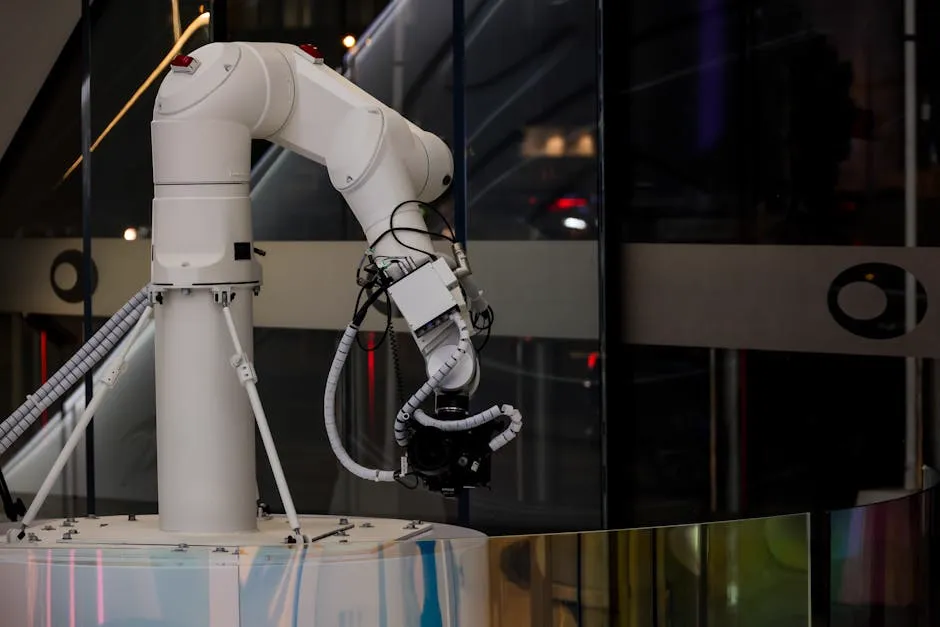
Αυτοματοποίηση Ροών Εργασίας με AI: Οδηγός για Αυτοματοποίηση Επιχειρησιακών Διαδικασιών
Η αυτοματοποίηση ροών εργασίας με AI είναι η αυτοματοποίηση επαναλαμβανόμενων επιχειρησιακών διαδικασιών χρησιμοποιώντας τεχνητή νοημοσύνη. Σε αυτόν τον οδηγό, εξετάζουμε στρατηγικές αυτοματοποίησης για επιχειρήσεις.
Κατηγορίες Αυτοματοποίησης
1. Επεξεργασία Εγγράφων
- Επεξεργασία τιμολογίων
- Ανάλυση συμβολαίων
- Εξαγωγή δεδομένων από φόρμες
2. Αυτοματοποίηση Επικοινωνίας
- Κατηγοριοποίηση email
- Αυτόματη απόκριση
- Δρομολόγηση αιτημάτων υποστήριξης
3. Επεξεργασία Δεδομένων
- Εξαγωγή δεδομένων
- Μετασχηματισμός δεδομένων
- Αναφορές
4. Αυτοματοποίηση Λήψης Αποφάσεων
- Διαδικασίες έγκρισης
- Αξιολόγηση κινδύνου
- Ανίχνευση ανωμαλιών
Ροή Επεξεργασίας Εγγράφων
Επεξεργασία Τιμολογίων
1from openai import OpenAI
2import base64
3
4client = OpenAI()
5
6def process_invoice(image_path: str) -> dict:
7    with open(image_path, "rb") as f:
8        image_data = base64.b64encode(f.read()).decode()
9
10    response = client.chat.completions.create(
11        model="gpt-4-vision-preview",
12        response_format={"type": "json_object"},
13        messages=[
14            {
15                "role": "system",
16                "content": """Extract information from the invoice:
17                {
18                    "vendor": "string",
19                    "invoice_number": "string",
20                    "date": "YYYY-MM-DD",
21                    "total": number,
22                    "tax": number,
23                    "items": [{"description": "string", "quantity": number, "price": number}]
24                }"""
25            },
26            {
27                "role": "user",
28                "content": [
29                    {"type": "image_url", "image_url": {"url": f"data:image/jpeg;base64,{image_data}"}}
30                ]
31            }
32        ]
33    )
34
35    return json.loads(response.choices[0].message.content)
Ανάλυση Συμβολαίων
1def analyze_contract(contract_text: str) -> dict:
2    response = client.chat.completions.create(
3        model="gpt-4-turbo",
4        response_format={"type": "json_object"},
5        messages=[
6            {
7                "role": "system",
8                "content": """Analyze the contract and extract the following information:
9                {
10                    "parties": ["string"],
11                    "effective_date": "YYYY-MM-DD",
12                    "termination_date": "YYYY-MM-DD",
13                    "key_obligations": ["string"],
14                    "payment_terms": "string",
15                    "risks": ["string"],
16                    "unusual_clauses": ["string"]
17                }"""
18            },
19            {"role": "user", "content": contract_text}
20        ]
21    )
22
23    return json.loads(response.choices[0].message.content)
24## Αυτοματοποίηση Email
25
26### Ταξινόμηση Email
27
28```python
29def classify_email(email_content: str, categories: list) -> dict:
30    response = client.chat.completions.create(
31        model="gpt-4-turbo",
32        response_format={"type": "json_object"},
33        messages=[
34            {
35                "role": "system",
36                "content": f"""Classify the email:
37                Categories: {categories}
38
39                Response format:
40                {{
41                    "category": "string",
42                    "confidence": 0.0-1.0,
43                    "priority": "high|medium|low",
44                    "sentiment": "positive|neutral|negative",
45                    "requires_response": boolean,
46                    "summary": "string"
47                }}"""
48            },
49            {"role": "user", "content": email_content}
50        ]
51    )
52
53    return json.loads(response.choices[0].message.content)
54
55# Usage
56categories = ["sales_inquiry", "support_request", "complaint", "partnership", "spam"]
57result = classify_email(email_body, categories)
Δημιουργία Αυτόματης Απάντησης
1def generate_auto_reply(email: dict, context: str = "") -> str:
2    response = client.chat.completions.create(
3        model="gpt-4-turbo",
4        messages=[
5            {
6                "role": "system",
7                "content": f"""Generate a professional auto-reply.
8                Tone: Friendly but professional
9                Language: English
10
11                Company info: {context}
12
13                Email category: {email['category']}
14                Priority: {email['priority']}
15                """
16            },
17            {"role": "user", "content": f"Email content:\n{email['content']}\n\nSummary: {email['summary']}"}
18        ]
19    )
20
21    return response.choices[0].message.content
Ορχηστρωσία Ροών Εργασίας
Διαδοχική Ροή
1class WorkflowPipeline:
2    def __init__(self):
3        self.steps = []
4
5    def add_step(self, name: str, function: callable, config: dict = None):
6        self.steps.append({
7            "name": name,
8            "function": function,
9            "config": config or {}
10        })
11
12    def execute(self, input_data: dict) -> dict:
13        result = input_data
14
15        for step in self.steps:
16            print(f"Executing: {step['name']}")
17            try:
18                result = step["function"](result, **step["config"])
19            except Exception as e:
20                return {"error": str(e), "failed_step": step["name"]}
21
22        return result
23
24# Pipeline definition
25pipeline = WorkflowPipeline()
26pipeline.add_step("extract", extract_data)
27pipeline.add_step("validate", validate_data)
28pipeline.add_step("transform", transform_data)
29pipeline.add_step("load", load_to_database)
30
31result = pipeline.execute({"file_path": "invoice.pdf"})
Υπό Συνθήκη Ροή
1class ConditionalWorkflow:
2    def __init__(self):
3        self.routes = {}
4        self.default_route = None
5
6    def add_route(self, condition: callable, handler: callable):
7        self.routes[condition] = handler
8
9    def set_default(self, handler: callable):
10        self.default_route = handler
11
12    def execute(self, data: dict) -> dict:
13        for condition, handler in self.routes.items():
14            if condition(data):
15                return handler(data)
16
17        if self.default_route:
18            return self.default_route(data)
19
20        raise ValueError("No matching route found")
21
22# Usage
23workflow = ConditionalWorkflow()
24workflow.add_route(
25    lambda x: x["category"] == "support",
26    create_support_ticket
27)
28workflow.add_route(
29    lambda x: x["category"] == "sales",
30    forward_to_sales
31)
32workflow.set_default(archive_email)
33## Εξαγωγή Δεδομένων
34
35### Εξαγωγή Πινάκων
36
37```python
38def extract_table_from_document(document_path: str) -> list:
39    # Convert document to image or parse PDF
40    images = convert_to_images(document_path)
41
42    all_tables = []
43    for img in images:
44        response = client.chat.completions.create(
45            model="gpt-4-vision-preview",
46            response_format={"type": "json_object"},
47            messages=[
48                {
49                    "role": "system",
50                    "content": "Extract tables from image as JSON array. Each table should be a list of dicts."
51                },
52                {
53                    "role": "user",
54                    "content": [
55                        {"type": "image_url", "image_url": {"url": img}}
56                    ]
57                }
58            ]
59        )
60
61        tables = json.loads(response.choices[0].message.content)
62        all_tables.extend(tables.get("tables", []))
63
64    return all_tables
Εξαγωγή Οντοτήτων
1def extract_entities(text: str, entity_types: list) -> dict:
2    response = client.chat.completions.create(
3        model="gpt-4-turbo",
4        response_format={"type": "json_object"},
5        messages=[
6            {
7                "role": "system",
8                "content": f"""Extract the following entities from text: {entity_types}
9
10                Format:
11                {{
12                    "entities": [
13                        {{"type": "string", "value": "string", "confidence": 0.0-1.0}}
14                    ]
15                }}"""
16            },
17            {"role": "user", "content": text}
18        ]
19    )
20
21    return json.loads(response.choices[0].message.content)
22
23# Usage
24entities = extract_entities(
25    "John Doe paid $5,000 on January 15, 2024.",
26    ["PERSON", "DATE", "MONEY"]
27)
Ροές Εγκρίσεων
1class ApprovalWorkflow:
2    def __init__(self, rules: list):
3        self.rules = rules
4
5    def evaluate(self, request: dict) -> dict:
6        for rule in self.rules:
7            if rule["condition"](request):
8                return {
9                    "decision": rule["action"],
10                    "rule_name": rule["name"],
11                    "approvers": rule.get("approvers", []),
12                    "reason": rule.get("reason", "")
13                }
14
15        return {"decision": "manual_review", "reason": "No matching rule"}
16
17    def ai_evaluate(self, request: dict) -> dict:
18        """Complex decisions with LLM"""
19        response = client.chat.completions.create(
20            model="gpt-4-turbo",
21            response_format={"type": "json_object"},
22            messages=[
23                {
24                    "role": "system",
25                    "content": f"""Approval rules: {json.dumps(self.rules)}
26
27                    Evaluate the request and decide:
28                    {{
29                        "decision": "approve|reject|escalate",
30                        "confidence": 0.0-1.0,
31                        "reasoning": "string",
32                        "risk_level": "low|medium|high"
33                    }}"""
34                },
35                {"role": "user", "content": json.dumps(request)}
36            ]
37        )
38
39        return json.loads(response.choices[0].message.content)
40
41# Rules
42rules = [
43    {
44        "name": "auto_approve_small",
45        "condition": lambda x: x["amount"] < 1000,
46        "action": "approve",
47        "reason": "Amount below threshold"
48    },
49    {
50        "name": "manager_approval",
51        "condition": lambda x: x["amount"] < 10000,
52        "action": "route",
53        "approvers": ["manager"]
54    }
55]
56
57workflow = ApprovalWorkflow(rules)
58## Διαχείριση Σφαλμάτων & Παρακολούθηση
59
60```python
61class AutomationMonitor:
62    def __init__(self):
63        self.executions = []
64
65    def log_execution(self, workflow_name: str, input_data: dict,
66                     result: dict, duration: float):
67        self.executions.append({
68            "workflow": workflow_name,
69            "timestamp": datetime.now(),
70            "success": "error" not in result,
71            "duration": duration,
72            "input_size": len(str(input_data)),
73            "error": result.get("error")
74        })
75
76    def get_metrics(self) -> dict:
77        if not self.executions:
78            return {}
79
80        successful = [e for e in self.executions if e["success"]]
81
82        return {
83            "total_executions": len(self.executions),
84            "success_rate": len(successful) / len(self.executions),
85            "avg_duration": sum(e["duration"] for e in self.executions) / len(self.executions),
86            "error_types": self._group_errors()
87        }
Μοτίβα Ενσωμάτωσης
Webhook Trigger
1from fastapi import FastAPI, Request
2
3app = FastAPI()
4
5@app.post("/webhook/email")
6async def handle_email_webhook(request: Request):
7    data = await request.json()
8
9    # Email processing
10    classification = classify_email(data["body"], CATEGORIES)
11
12    if classification["requires_response"]:
13        reply = generate_auto_reply(data, COMPANY_CONTEXT)
14        send_email(data["from"], reply)
15
16    # Route to appropriate workflow
17    workflow = get_workflow(classification["category"])
18    result = workflow.execute(data)
19
20    return {"status": "processed", "result": result}
Συμπέρασμα
Η αυτοματοποίηση ροών εργασίας με AI επιταχύνει τις επιχειρησιακές διαδικασίες και μειώνει τα ποσοστά σφάλματος. Σημαντικά οφέλη αποδοτικότητας μπορούν να επιτευχθούν στην επεξεργασία εγγράφων, την αυτοματοποίηση email και τα συστήματα υποστήριξης αποφάσεων.
Στη Veni AI, αναπτύσσουμε λύσεις αυτοματοποίησης για επιχειρήσεις.