
Increase Yield and Reduce Waste in Flour Milling
A practical operating model for flour mills that need tighter quality bands, lower energy intensity, and faster issue response.
This page is designed for wheat processors and flour factory owners evaluating AI investments in quality, maintenance, blending, and storage-to-mill planning.
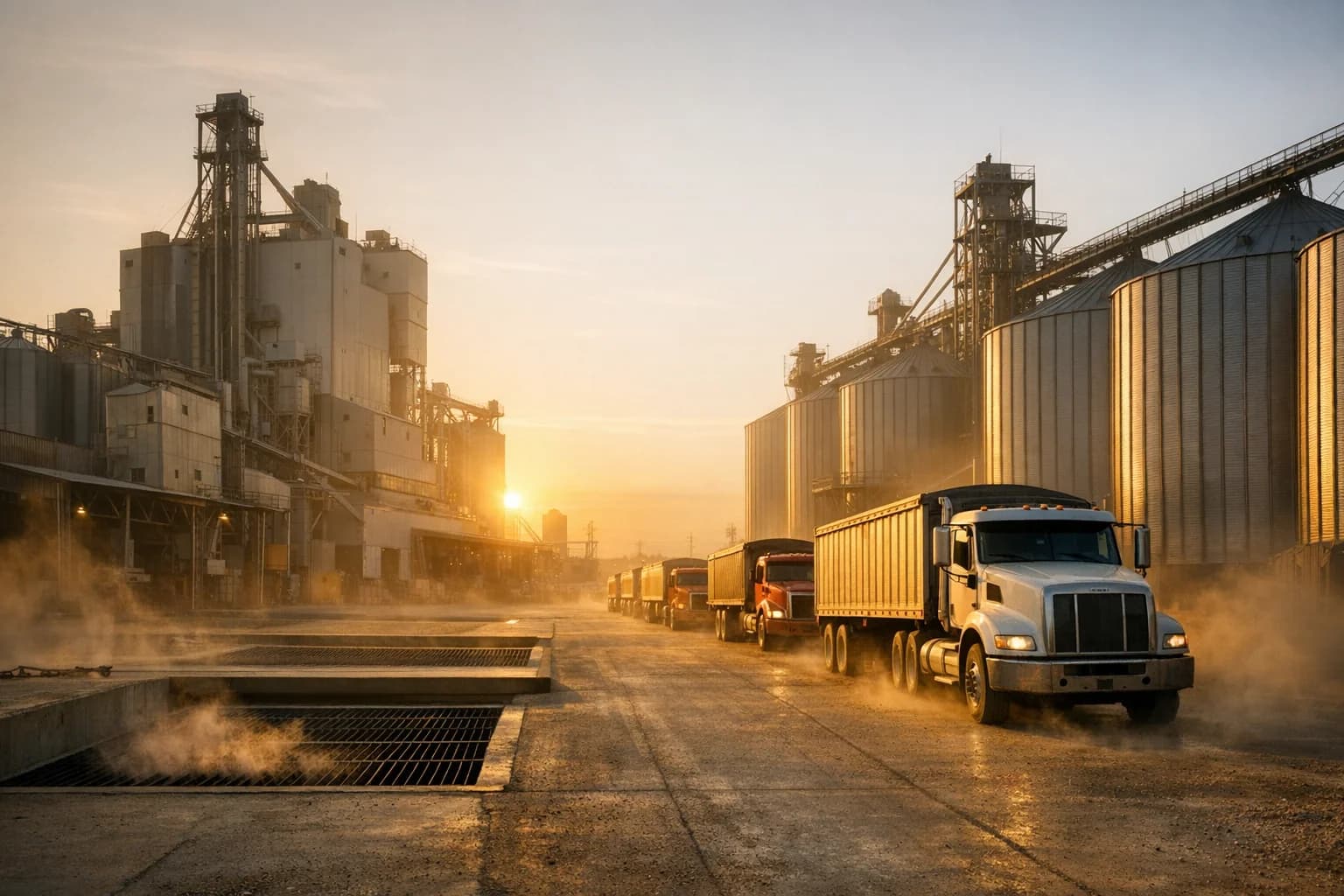
Scenario Metric References
| Metric | Value | Note |
|---|---|---|
| Global market (2025) | $200–250B+ | |
| CAGR range | 4.1–4.6% | |
| Disease detection accuracy | 90–97%+ | |
| Mill maintenance impact | Up to 50% less downtime | |
| Inline QC latency | <120–180 ms on edge cameras | |
| Model uptime SLA | 99.5%+ with health checks and rollback | |
| Pilot-to-scale timeline | 8–12 week pilot; 6–9 month scale-out | |
| Quality variance target | -20% to -35% on key flour specs after control-loop tuning | |
| Unplanned stops target | -15% to -30% with condition-based maintenance orchestration |
Executive Summary: Wheat Market Outlook and AI Opportunity
The global wheat market is roughly $200–250B+ by 2025, with long‑term growth around 4% depending on definitions.
Wheat supplies about 20% of global calories, making it strategic for food security and economic stability.
Where AI creates value
- Field: disease detection, yield forecasting, precision input optimization.
- Storage & trade: warehouse monitoring, price/demand forecasting, stock optimization.
- Flour mills: wheat quality classification, milling/blend optimization, quality control.
- Portfolio planning: procurement and hedging decisions informed by demand signals.
Typical benefit examples
- Disease detection at 90–97%+ accuracy; early diagnosis enables double‑digit loss reduction.
- Yield forecasting reduces error versus traditional methods and improves planning.
- Predictive maintenance in mills lifts productivity by ~25% and cuts downtime up to 50%.
AI is a strategic lever across the wheat‑to‑flour chain, improving quality and efficiency together.
Global Wheat and Flour Market Outlook and Trade Dynamics
Production, usage, and macro trends at a glance.
Sector overview
- Wheat is among the most produced and consumed grains globally.
- China, India, Russia, the US, Canada, the EU, and Australia are major producers.
- Outputs include flour, semolina, bran, gluten, and starch used across food and industry.
Macro trends
- OECD–FAO projections show steady demand growth through the 2030s.
- Climate change and yield pressure accelerate AI adoption in agriculture.
- Mills face volatility in input quality, energy costs, and quality consistency.
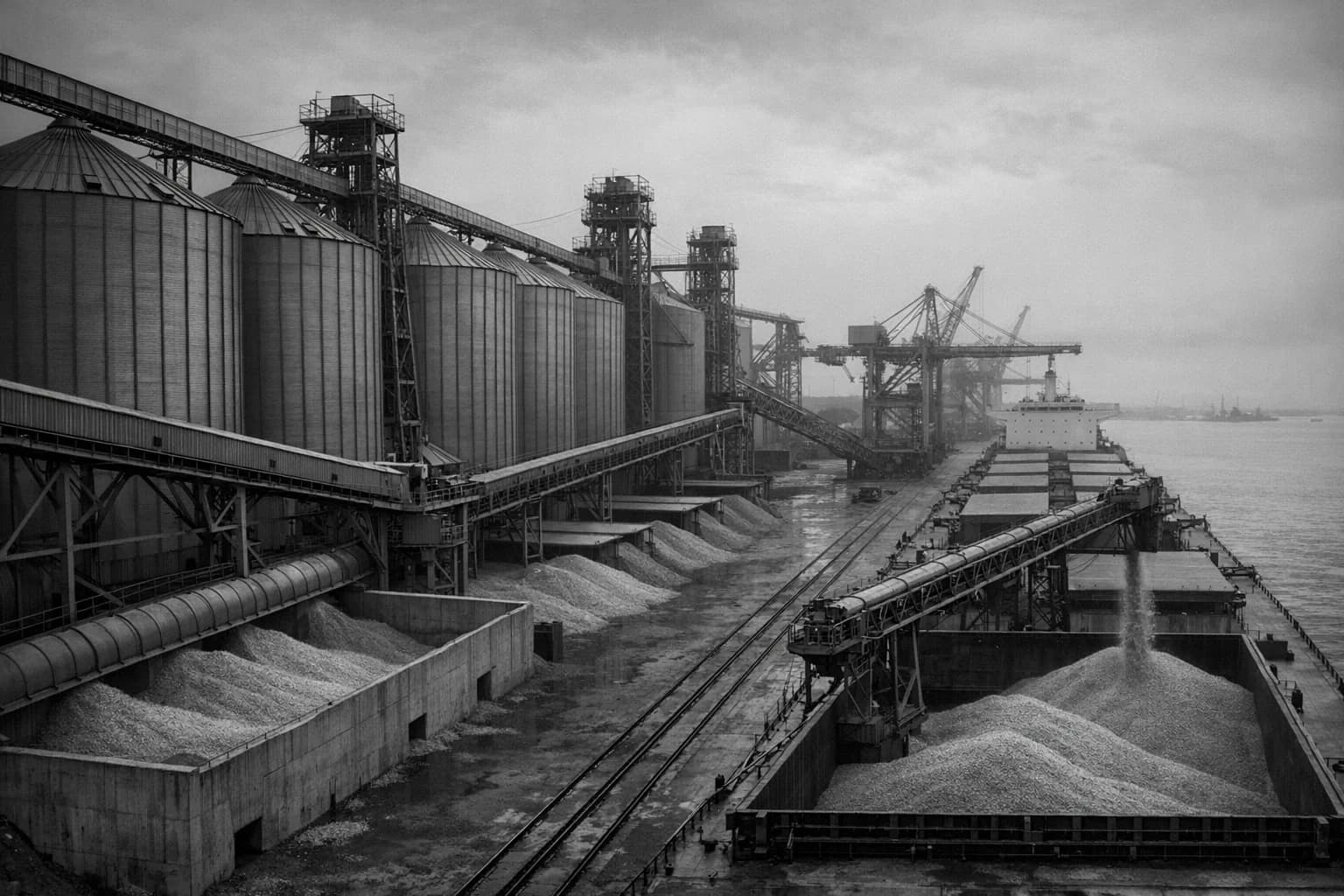
AI Across the Wheat-to-Flour Value Chain
Key AI touchpoints from field to flour mill.
Field and production
- Variety selection, sowing timing, fertilizer and irrigation optimization.
- Disease and pest detection.
- Yield forecasting and risk management.
Harvest, storage, and trade
- Humidity, temperature, and pest monitoring to reduce quality loss.
- Price/demand forecasting and contract management.
- Logistics and inventory optimization.
Flour mills
- Automated wheat quality classification.
- Milling parameter and blend optimization.
- Quality control, traceability, maintenance, and energy optimization.
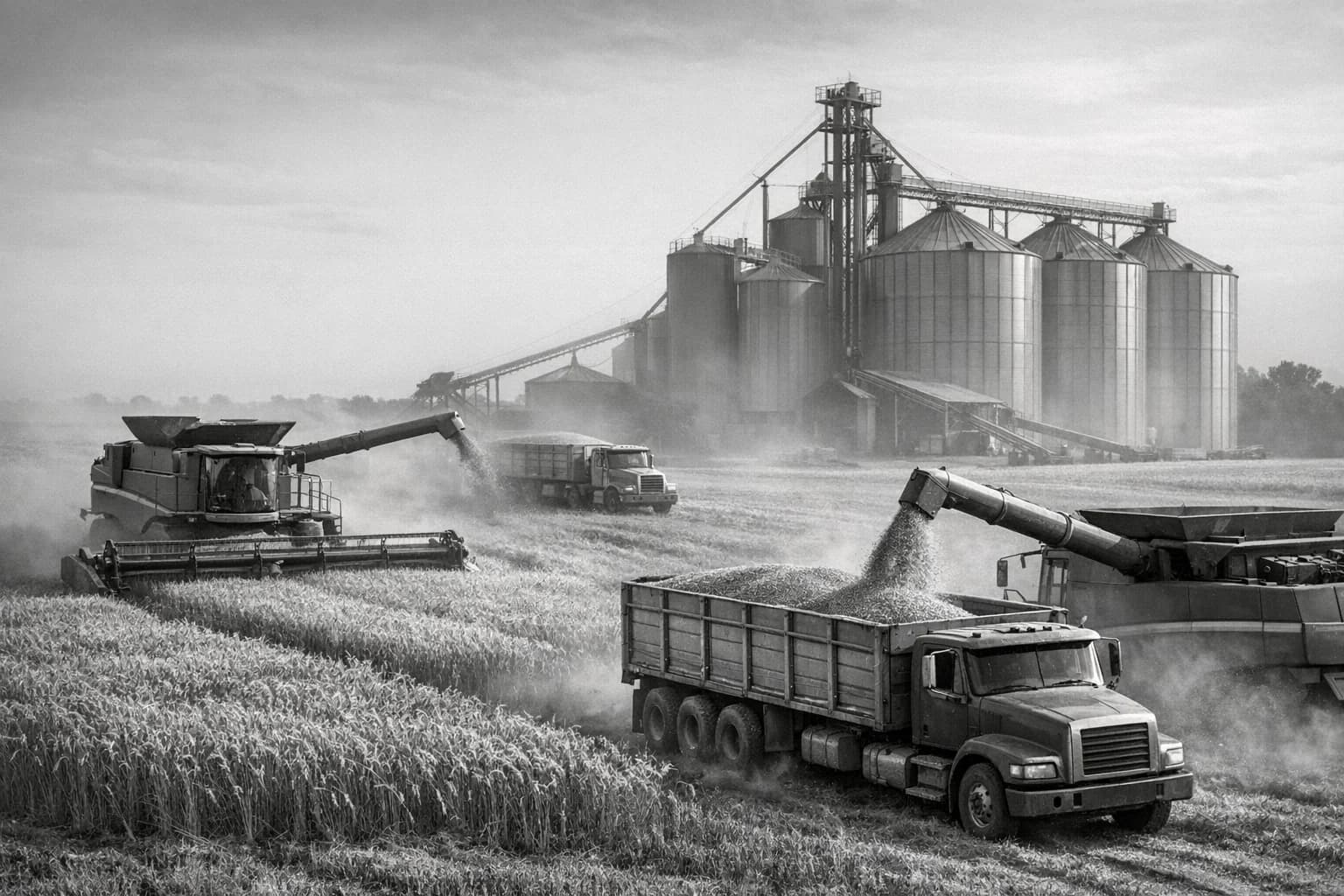
Field AI Use Cases for Wheat Production
Disease detection, yield forecasting, and precision agriculture.
3.1 Disease and pest detection (computer vision)
CNN‑based models achieve high accuracy for wheat leaf diseases.
Multimodal approaches (image + environmental sensors) report 96.5% accuracy and 97.2% recall.
- Transfer learning accelerates adoption with limited datasets.
- YOLOv5/v8 and Faster R‑CNN for lesion detection.
- Early diagnosis reduces chemical use and yield loss.
3.2 Yield forecasting and climate risk
Combining climate, soil, and remote sensing data reduces forecast error.
Models capture spatiotemporal patterns better than traditional methods.
- LSTM, GRU, TCN, and time‑series transformers.
- XGBoost/LightGBM as strong tabular baselines.
- Improved planning for contracts and insurance.
3.3 Precision agriculture
- Satellite/drone + soil sensors for NDVI, moisture, and nutrient deficiency detection.
- U‑Net, DeepLab, SegFormer for segmentation and field mapping.
- Lower input costs and environmental impact.
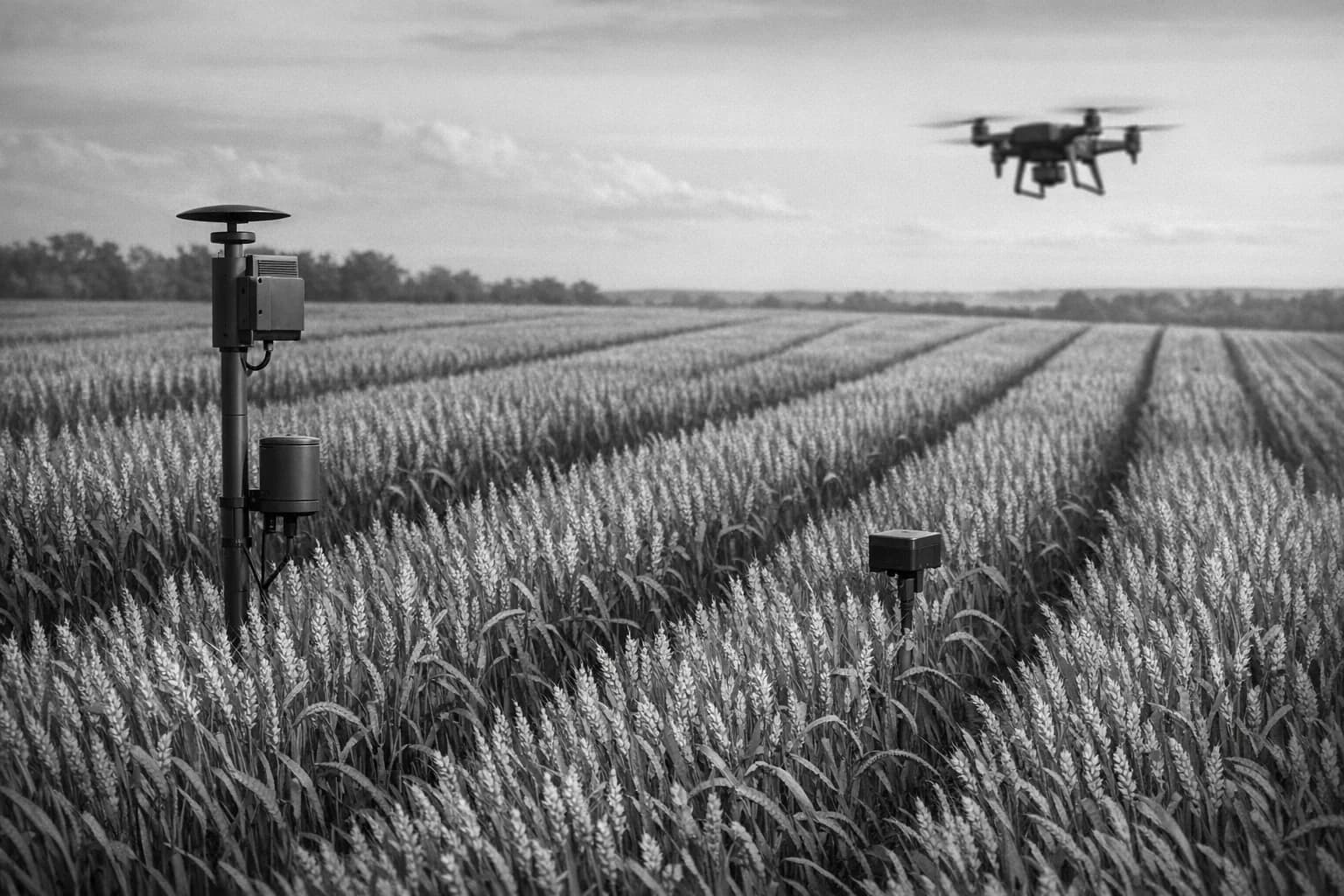
Storage, Logistics, and Trade AI for Grain Systems
Storage management
- Humidity, temperature, CO₂, and pest activity monitoring reduces spoilage.
- Anomaly detection flags mold and infestation risks early.
Price and demand forecasting
- Time‑series models (XGBoost, LSTM, Prophet, transformers).
- Decision support for contracts and inventory policy.
Logistics optimization
- Route and load planning optimization.
- Terminal capacity alignment with supply planning.
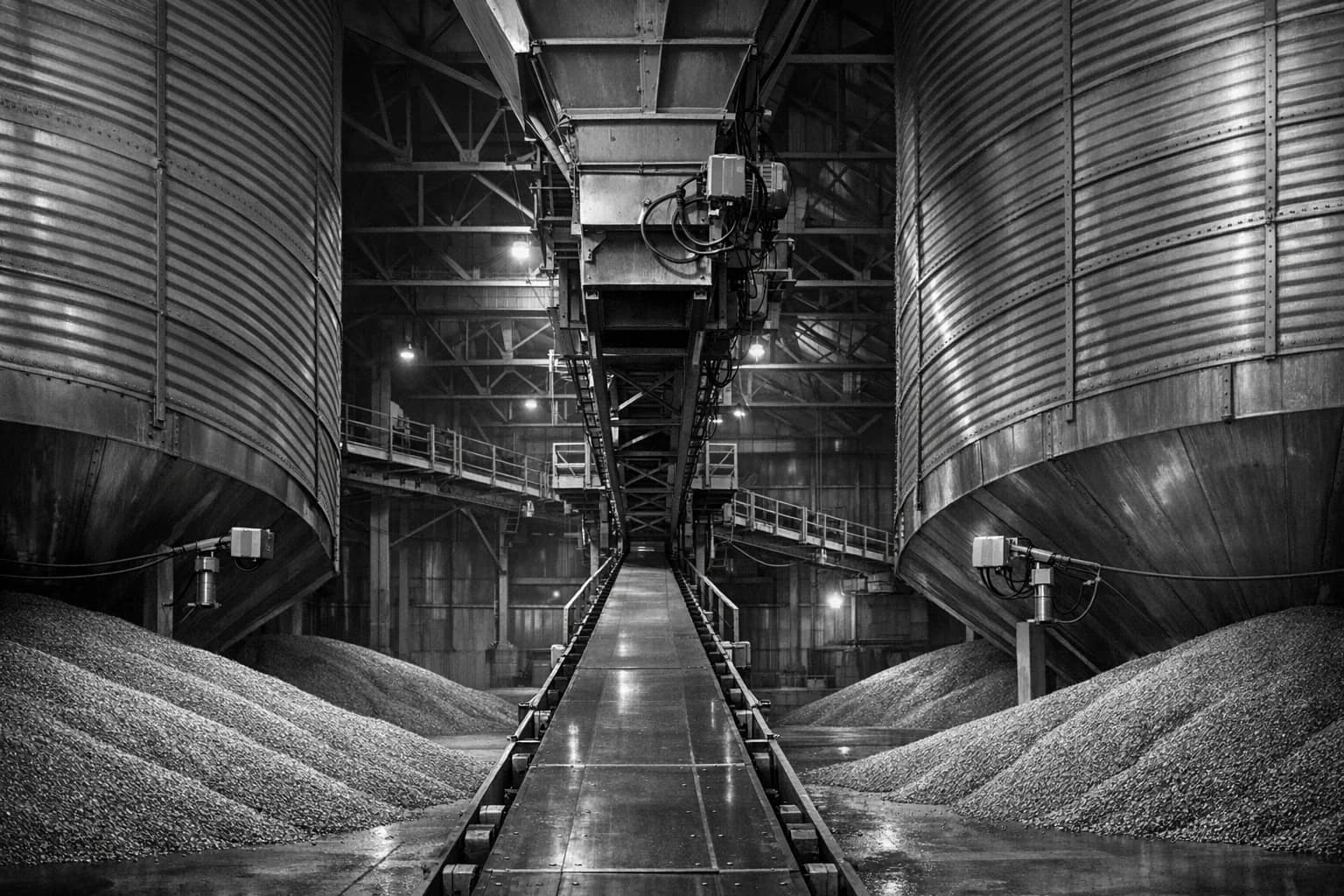
AI in Flour Mills: Quality, Yield, and Energy Optimization
Input quality measurement, milling optimization, and traceability.
5.1 Input wheat quality: automated measurement and classification
- NIR and imaging for protein, gluten, moisture, hardness.
- XGBoost/Random Forest for classification and blend suggestions.
- CNN‑based image classification for vitreousness and grain defects.
5.2 Milling process optimization
- Roller gaps, speeds, sieve combinations, and flow rates optimized by AI.
- Quality–yield–energy trade‑offs modeled and tuned.
- GBM + optimization + (long term) RL control.
5.3 Blending and recipes
- Multi‑objective optimization: quality + cost + yield.
- Simulation reduces risk when testing new recipes.
- Lower reliance on expensive high‑protein wheat.
5.4 Flour quality, safety, and traceability
- Inline NIR tracks protein, ash, color.
- Early warnings for quality drift and batch homogeneity.
- Farm‑to‑fork traceability with data integration.
5.5 Predictive maintenance and energy optimization
- Grain intake analysis up to 30× faster.
- Productivity +25%, asset life +20%, downtime up to −50%.
- Meaningful energy savings reported.

AI Model Families and Reference Architectures
Vision models
- ResNet, EfficientNet, MobileNet, DenseNet (transfer learning).
- YOLOv5/v8, Faster R‑CNN, RetinaNet (detection).
- U‑Net, DeepLab, SegFormer (segmentation).
Time-series and forecasting models
- XGBoost, LightGBM, Random Forest.
- LSTM, GRU, TCN, time-series transformers.
- Code example (Python): `forecast = prophet_model.fit(df).predict(future_df)`.
Tabular and process models
- XGBoost, LightGBM, CatBoost, Random Forest.
- MLP models for nonlinear relationships.
Optimization and decision‑making
- LP/QP with ML predictors.
- Genetic algorithms and Bayesian optimization.
- RL‑based process control (DDPG, PPO).
Multimodal solutions
- Image + sensor fusion.
- Imaging + NIR + process parameter integration in mills.
Quantified Benefits and KPI Impact
Field – disease detection
- 90–97%+ detection accuracy.
- Double‑digit potential reduction in yield loss through early detection.
Field – yield forecasting
- 10–30% improvement in forecast error.
- Lower uncertainty for contracts and planning.
Flour mills
- Up to 30× faster grain intake analysis.
- Predictive maintenance: +25% productivity and up to −50% downtime.
- Meaningful energy savings.
For mid‑to‑large operators, value creation can reach millions of dollars annually.
Phased AI Execution Roadmap for Wheat and Flour
An actionable roadmap for integrated field + mill operators.
Phase 1 - Data foundation and prioritization
- Identify pain points: yield volatility, storage losses, milling yield/energy/quality.
- Create data inventory across field, storage, and mill systems.
- Build core dashboards for yield, losses, yield, and energy.
Phase 2 - Quick-win pilots and validation
- Disease detection pilot with CNN models.
- Mill quality + predictive maintenance pilots with expanded sensor data.
- Storage monitoring PoC with anomaly detection.
Phase 3 - Scale and integration across the chain
- Roll out disease detection across a wider farmer network.
- Deploy blend optimization and AI‑assisted quality decisions.
- Optimize supply chain and trading using forecasting + inventory models.
Leadership Recommendations and Execution Priorities
- Make AI part of an end‑to‑end strategy from field to mill.
- Do not build models without data standardization and a data dictionary.
- Pick models by task: CNN/YOLO for vision, LSTM/GBM for forecasting.
- Start with small, high‑impact pilots.
- Balance internal capability with transparent external partners.
Sources and Further Reading
10.1 Wheat market and agricultural outlook
- Renub | Global Wheat Market Size, Share & Forecast 2025–2033https://www.renub.com/global-wheat-market-p.php
- TowardsFNB | Wheat Market Size, Growth, and Trends 2025 to 2035https://www.towardsfnb.com/insights/wheat-market
- Mordor Intelligence | Wheat Market Size, Share & Industry Growth Analysis, 2031https://www.mordorintelligence.com/industry-reports/global-wheat-market-growth-and-trends
- OECD–FAO | Agricultural Outlook 2024–2033 (wheat section)https://www.oecd.org/content/dam/oecd/en/publications/reports/2024/07/oecd-fao-agricultural-outlook-2024-2033_e173f332/...
- FAO | Wheat (Market Summary)https://www.fao.org/markets-and-trade/do-not-touch/all-widgets/wheat-(market-summary)-nov-2025/en
10.2 Wheat diseases and AI – field
- IJISRT | Deep learning-based wheat disease detection: literature survey (2024)https://www.ijisrt.com/assets/upload/files/IJISRT24NOV810.pdf
- Frontiers in Plant Science | Multimodal data fusion for wheat leaf pest and disease detection (2025)https://pmc.ncbi.nlm.nih.gov/articles/PMC12417405/
- PLoS One | Smart phone application for wheat crop diseases detection (2025)https://pmc.ncbi.nlm.nih.gov/articles/PMC11709305/
- Nature Scientific Reports | AI based real time disease diagnosis in plants (2026)https://www.nature.com/articles/s41598-025-34681-1
10.3 Yield forecasting
- Frontiers | Enhanced wheat yield prediction through integrated climate and remote sensing data (2025)https://pmc.ncbi.nlm.nih.gov/articles/PMC12103530/
10.4 AI in milling and flour
- Miller Magazine | From grain to flour: AI in wheat milling (2024)https://millermagazine.com/blog/from-grain-to-flour-unleashing-the-power-of-artificial-intelligence-in-wheat-milling-5585
- Depart | Milling of the Future: AI Applications from Wheat to Flour (2026)https://www.departspares.com/milling-of-the-future-artificial-intelligence-applications-from-wheat-to-flour/?lang=en
- AIMS Agriculture and Food | Future trends in organic flour milling: the role of AI (2023)https://www.aimspress.com/article/id/63928861ba35de77c348d2d5
- EasyODM | Flour Mills: 7 AI-Driven Changes For Better Operations (2024)https://easyodm.tech/flour-mills/
- Tridge | AI is shaping the future of the flour milling industry (2025)https://www.tridge.com/news/artificial-intelligence-is-shaping-the-futur-usojbk
Additional standards and market references (2024-2026)
- FAO | World Food Situation (Cereal supply and demand updates)https://www.fao.org/worldfoodsituation/en/
- OECD-FAO | Agricultural Outlook 2024-2033https://www.oecd.org/en/publications/oecd-fao-agricultural-outlook-2024-2033_4c5d2cfb-en.html
- USDA | WASDE reportshttps://www.usda.gov/oce/commodity/wasde
- International Grains Council | Market informationhttps://www.igc.int/en/markets/marketinfo-sd.aspx
Governance, MLOps, and Deployment Patterns for Agri-Industrial AI
Field + mill AI needs disciplined data, model governance, and safe rollout patterns to protect yield and quality.
Data quality and labeling
- Golden datasets with agronomist and miller review; SOPs for disease labels, protein/ash targets, and defect taxonomies.
- Data versioning with traceability to season, parcel, storage lot, and mill batch; audit-ready metadata.
HITL and rollout safety
- Shadow mode for disease detection and QC before turning on interventions; operator confirmation thresholds.
- HITL review loops for misclassifications; escalation for edge cases and rare diseases or defects.
Monitoring, drift, and resilience
- Real-time latency/uptime SLOs for inline vision (<200 ms) with watchdogs and fail-closed behavior.
- Concept drift monitoring on image + NIR distributions; retrain triggers tied to harvest seasons and wheat varieties.
Deployment patterns
- Edge inference for fields and intake labs; cloud/VPC for training and forecasting with PrivateLink and no raw PII export.
- Versioned rollbacks for models and recipes; blue/green deployments for mill optimization services.
Security and compliance
- Network isolation for mill OT; signed binaries for edge devices; encrypted data in transit/at rest.
- Access control and audit logs for QC overrides and recipe changes.
Why Veni AI for Wheat and Flour Transformation
Veni AI brings wheat-to-flour experience, end-to-end delivery, and hardened MLOps for production environments.
What we deliver
- End-to-end: data pipelines, labeling QA, evaluation harnesses, and operator-ready dashboards across field, storage, and mills.
- Inline vision + NIR stacks tuned for low-latency edge inference with fallback and health checks.
- Pilot-to-scale playbook: 8–12 week PoCs; 6–9 month rollout with change management and operator training.
Reliability and governance
- Shadow-mode launch, HITL approvals, and rollback/versioning baked into releases.
- Continuous monitoring for drift, anomaly, latency, and uptime; alerting to OT and quality leads.
Security and connectivity
- Secure connectivity (VPC, PrivateLink, VPN) and OT isolation; no secrets or PII exposed.
- Edge/cloud hybrid designs to keep production running even when connectivity is degraded.
Higher yield, tighter quality bands, and safer operations—from field to flour—with measurable reliability.
Factory Owner Decision Playbook for Flour Mills
Decision support for leadership teams evaluating where to start, how to measure value, and how to de-risk rollout.
High-intent search queries this page targets
- AI for flour mill quality control
- How to reduce protein and ash variability in flour production
- Predictive maintenance for roller mills and sifters
- Wheat blending optimization software for mills
90-day pilot KPI set
- Protein and ash standard deviation by batch and by line.
- Extraction rate uplift and rework volume reduction.
- Specific energy consumption per ton of output.
- Unplanned downtime minutes on critical assets.
- Time-to-detect and time-to-correct quality drift.
Investment and payback checkpoints
- Prioritize one revenue KPI (spec premium capture) and one cost KPI (energy or waste) for each pilot.
- Gate Phase 2 scale-up on baseline-adjusted KPI movement over at least one full production cycle.
- Tie operator incentives to adherence on new AI-assisted control procedures.
- Model downside scenarios (input quality volatility, seasonality, maintenance backlog) before CAPEX expansion.
For most plants, value appears fastest when one quality KPI and one throughput/cost KPI are governed together under a single pilot owner.
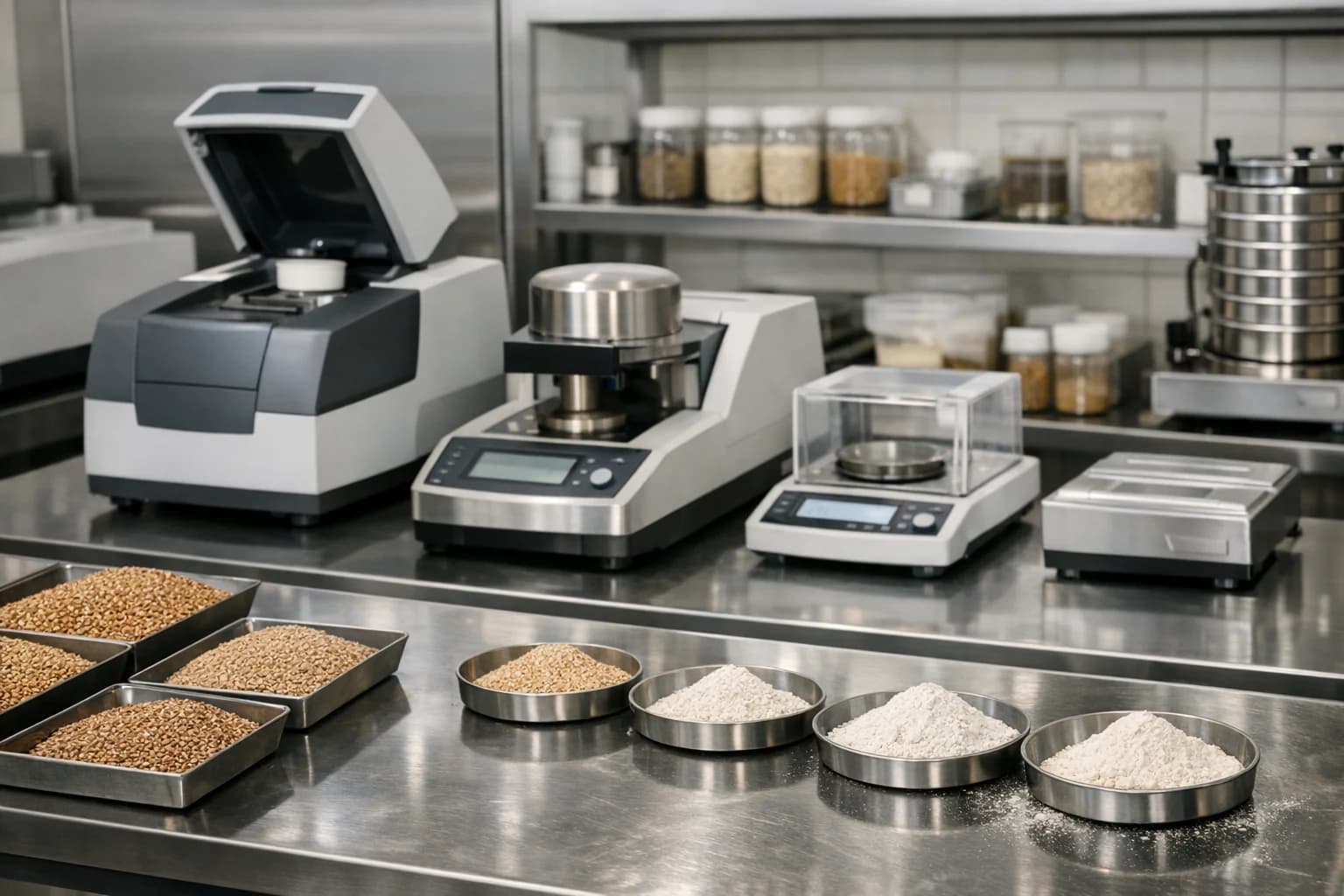
Production Data and Integration Blueprint for Flour Milling
Operational architecture required to keep model outputs reliable in production, not just in proof-of-concept environments.
Systems that must be connected first
- Mill SCADA/PLC historian for process states and alarms.
- NIR/LIMS quality systems for protein, ash, moisture, and color.
- ERP purchasing and inventory for wheat lot economics and blending constraints.
- Storage telemetry (temperature, humidity, CO2) for spoilage and conditioning risk.
- Maintenance systems (CMMS) for failure history, spares, and intervention lead time.
Model risk and governance requirements
- Define golden quality labels with QA leadership before model retraining cadence is finalized.
- Run shadow mode first, then progressive autonomy with explicit override ownership.
- Track model drift by season, supplier profile, and wheat variety mix.
- Version control model + recipe + control limits as one release bundle.
Scale-up criteria before multi-site rollout
- Two consecutive production windows meeting quality and uptime thresholds.
- Documented rollback and incident response drills completed by plant teams.
- Evidence that gains persist during raw-material quality variability.
- Cross-shift operator adoption above agreed minimum usage threshold.
Treat data quality, model lifecycle controls, and operator adoption as one integrated system; scaling only one layer usually destroys ROI.
Want to adapt this scenario to your factory?
Let's collaborate on data readiness, pilot selection, and ROI modeling.