
Keep GMP Stable and Shorten Release Cycles
How regulated plants implement AI with validation discipline, data integrity, and controlled risk.
This scenario supports pharma manufacturing leaders who need AI gains while maintaining GMP, validation, and audit readiness.
Scenario Metric References
| Metric | Value | Note |
|---|---|---|
| Pharma manufacturing (2024) | $580–650B | |
| 2034 outlook | $1.2–1.9T | |
| AI market (2031–2040) | $35–50B | |
| QC cost impact | Up to −50% | |
| Inline QC latency | <120–200 ms edge inference | |
| Uptime target | 99.5%+ with health checks and rollback | |
| Validation cycle | CSV/Part 11/PQ in 3–5 months | |
| Pilot-to-scale | 8–12 week pilot; 6–9 month multi-line rollout | |
| Deviation reduction target | -10% to -25% in repeatable root-cause classes after model-assisted controls | |
| Batch-cycle efficiency target | +5% to +15% via schedule and process-setpoint optimization |
Executive Summary: Pharma Manufacturing Market and AI Opportunity
Global pharmaceutical manufacturing was roughly $580–650B in 2024 and is projected to reach $1.2–1.9T by 2034.
AI in pharma/drug manufacturing is still small but growing aggressively at 30–40%+ per year.
Data integrity and validation-ready pipelines are now prerequisites for scaling AI in GMP environments.
Market size examples
- AI in Pharma Manufacturing: ~$4.4B in 2024 → $50.5B by 2031 (CAGR 41.8%).
- AI in Drug Manufacturing: $0.9B in 2025 → $34.8B by 2040.
- Broader AI in Pharma: ~$3B in 2024 → $18–35B by 2029/2034.
Production‑level focus areas
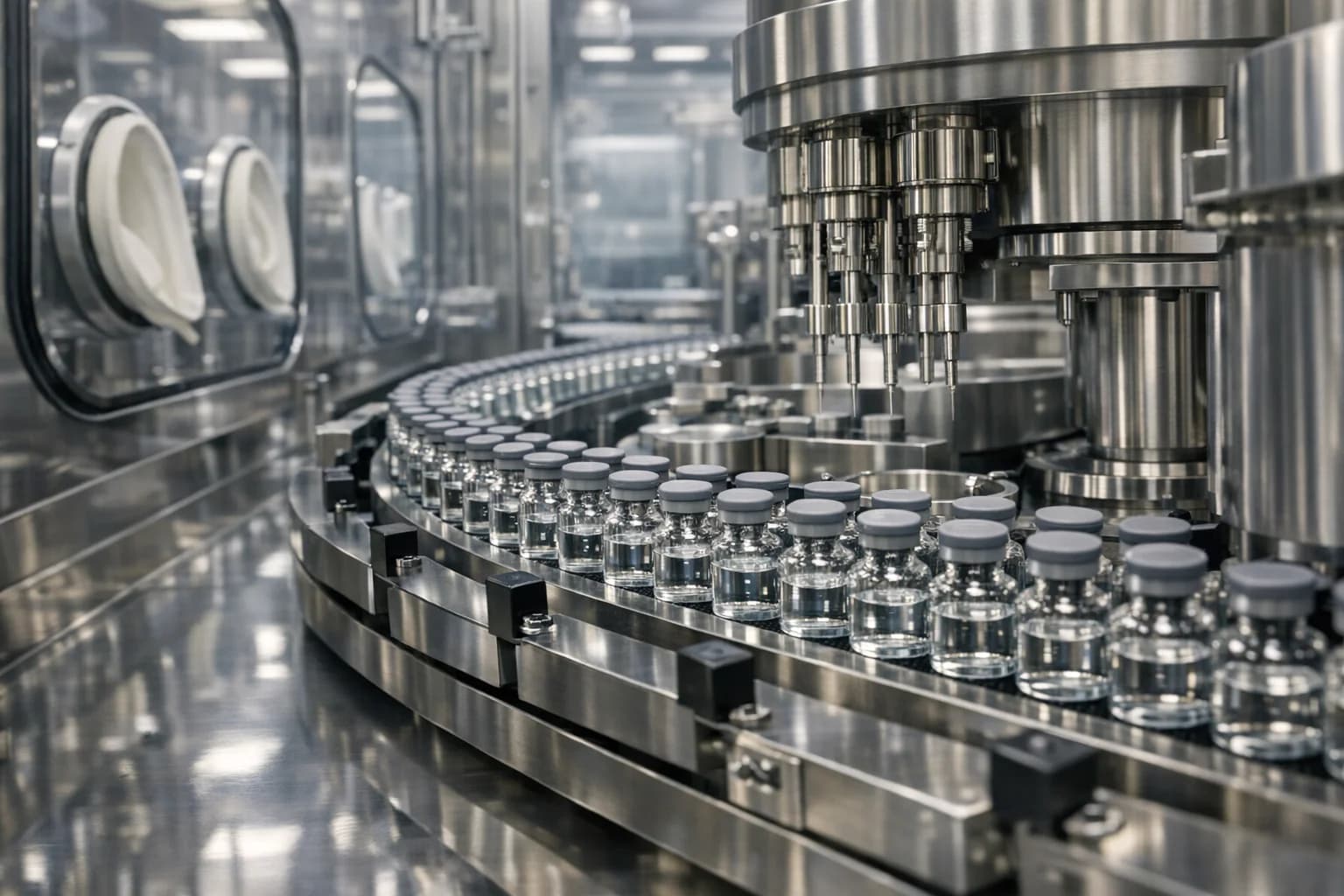
- QC: 100% visual inspection of tablets, vials, syringes, and devices.
- Predictive maintenance on bioreactors and fill‑finish lines.
- PAT and process optimization for yield improvement.
- Supply chain traceability and anti‑counterfeit detection.
AI is no longer only about efficiency; it is a new standard for patient safety and compliance.
Global Pharma and Medical Manufacturing Market Outlook
Market size and sector dynamics at a glance.
1.1 Market size and dynamics
- Pharma manufacturing: $649.76B in 2025; $1.2–1.9T by 2034.
- Pharma + medical device manufacturing: $1.07T in 2024; $2.5T by 2034 (CAGR 8.9%).
Key trends
- Shift to biologics and personalized medicine increases process complexity.
- FDA/EMA expectations on data integrity and Pharma 4.0 are rising.
- Post‑pandemic supply resilience and cost optimization remain critical.

AI in Pharma Manufacturing: Market Size, Growth, and Adoption
Reports show the production‑side AI market in pharma is entering a hyper‑growth phase.
2.1 Market size and growth
- AI in Pharma Manufacturing: $4.4B in 2024 → $50.5B by 2031 (CAGR 41.8%).
- AI in Drug Manufacturing: $0.9B in 2025 → $34.8B by 2040.
- AI in Pharma (broad): ~$3B in 2024 → $18–35B by 2029/2034.
2.2 Focus areas
- Quality control and visual inspection.
- Predictive maintenance and GMP compliance.
- PAT and process optimization.
- Supply chain and anti‑counterfeiting.
AI is shifting from R&D toward the shop floor in pharma and medical manufacturing.

Production-Focused AI Use Cases for GMP Operations
Core applications across QC, maintenance, and supply chain.
3.1 Quality control and visual inspection
Even tiny defects in pharma and medical devices carry patient risk; manual inspection is slow and inconsistent.
Deep‑learning inspection systems enable near‑100% coverage.
- Tablets: cracks and color deviations; vials: particulates, caps, fill levels.
- Devices: microscopic surface scratches, assembly defects, seal integrity.
- Audit trails strengthen regulatory compliance.
- Inline latency targets <200 ms for eject decisions; FP/FN thresholds tuned with QA.
3.2 Predictive maintenance
Failures in bioreactors, lyophilizers, or fill‑finish lines can wipe out entire batches.
Sensor data enables early detection and GMP risk mitigation.
- Vibration, temperature, pressure signals detect early anomalies.
- Critical HVAC and sterilization systems monitored in real time.
- Lower maintenance costs and batch salvage potential.
- Edge gateways in cleanrooms; buffered sync to cloud/VPC for training.
3.3 Supply chain and anti‑counterfeiting
- Demand forecasting for better stock optimization.
- Serialization analytics for counterfeit detection.
- Improved traceability and reduced recall risk.
- Computer vision for package/label integrity in secondary packaging.

Process Optimization, PAT, and Real-Time Release
Golden batch, yield prediction, and dynamic control.
4.1 Golden Batch and yield prediction
- Models learn ideal temperature, pH, and feed profiles.
- Yield can be predicted before batch completion.
- Multivariate PAT with spectroscopy and soft sensors for CPP/CQA.
- Code example (API): `POST /api/batch/predict { 'batch_id': 'B-1024', 'features': [..] }`.
4.2 Operational outcomes
- 5–10% yield uplift in bioprocessing.
- Lower waste and energy use.
- More consistent product quality.
- Faster deviation root-cause analysis with digital batch records.

AI Model Families and Reference Architectures
Visual QC
- ResNet, EfficientNet (classification).
- YOLO, Faster R‑CNN (detection).
- Autoencoder (anomaly detection).
- Vision transformers for vial/tablet surface anomalies.
Predictive maintenance
- LSTM, GRU (time‑series).
- Isolation Forest, One‑Class SVM.
- XGBoost for sensor‑feature classification.
- Spectral/pressure signatures for filtration and membrane fouling.
Process optimization
- XGBoost, LightGBM for yield prediction.
- Bayesian optimization for parameter tuning.
- Reinforcement Learning for dynamic control.
- Chemometric/PLS models for inline PAT.
Demand forecasting
- Prophet, ARIMA, LSTM.
- Temporal Fusion Transformer (TFT).
Quantified Benefits and KPI Impact
Quality cost
- Visual inspection automation can reduce QC costs by up to 50%.
- False-reject reduction with tuned thresholds; traceable audit logs.
OEE and maintenance
- Predictive maintenance lifts OEE by 10–20%.
- Meaningful reductions in unplanned downtime.
- Batch-save scenarios when early anomalies are caught.
Yield and time‑to‑market
- 5–10% yield uplift in bioprocessing.
- 20–30% faster tech transfer and validation.
- Release cycle time reduction with inline PAT and analytics.
AI improves cost and compliance simultaneously in regulated manufacturing.
Phased AI Execution Roadmap for Regulated Manufacturing
An actionable roadmap for pharma and medical manufacturers.
Phase 1 - Data readiness and pilot selection
- Assess SCADA, LIMS, QMS data and ALCOA+ integrity.
- Select the highest‑pain area (fill‑finish, QC station, etc.).
- Decide cloud vs. on‑prem infrastructure.
- Define defect taxonomies and labeling SOP with QA sign-off.
Phase 2 - Pilot deployment and validation
- Visual QC pilot for tablets/devices; track accuracy and false rejects.
- Predictive maintenance pilot on 3–5 critical assets.
- Establish baseline KPIs.
- Shadow mode + HITL approvals before automatic ejection.
Phase 3 - Validation, scale, and change control
- Complete CSV validation and ensure XAI for regulators.
- Scale pilots across lines and plants.
- Integrate AI outputs into MES/ERP for automated actions.
- Implement blue/green releases with rollback for QC models.

Leadership Recommendations and Execution Priorities
- Compliance by design: align with GMP, FDA 21 CFR Part 11, and data integrity from day one.
- Start with quality control for the clearest ROI and risk reduction.
- Strengthen IT/OT integration and data flow.
- Build cross‑functional teams: data science + process engineering + quality.
- Prefer explainable models over black‑box approaches.
Sources and Further Reading
Market size and trends
- Precedence Research | Pharmaceutical Manufacturing Market Size to Hit USD 1,905.76 billion by 2034
- Market.us | Pharmaceutical Manufacturing Market Size | CAGR of 7.5%
- Fact.MR | Pharmaceuticals & Medicine Manufacturing Market 2034
- Precedence Research | AI in Pharmaceutical Market Size to Hit USD 16.49 Billion by 2034
AI market size (production focus)
- Precision Business Insights | AI in Pharma Manufacturing Market Size (CAGR 41.8%)
- Roots Analysis | Global AI in Drug Manufacturing Market Size
- InsightAce Analytic | AI in Drug Manufacturing Market Size (CAGR 23.4%)
- aiOla | The Future of AI in Pharma Manufacturing
Applications (quality, maintenance, process)
- Cloudtheapp | AI and Machine Learning in Medical Device Quality
- Think AI Corp | AI‑Driven Data Analytics for Quality Control in Medical Device Manufacturing
- Think AI Corp | 10 AI Technologies Set to Revolutionize Healthcare Manufacturing
- PMC | System Perspective (predictive maintenance in medical equipment)
Additional standards and regulatory references (2024-2026)
- FDA | PAT Framework for Innovative Pharmaceutical Development, Manufacturing, and Quality Assurancehttps://www.fda.gov/regulatory-information/search-fda-guidance-documents/pat-framework-innovative-pharmaceutical-development-manufacturing-and-quality-assurance
- EMA | Artificial intelligence in medicines regulationhttps://www.ema.europa.eu/en/about-us/how-we-work/data-regulation-big-data-other-sources/artificial-intelligence
- EMA | Reflection paper on AI in the medicinal product lifecyclehttps://www.ema.europa.eu/en/documents/scientific-guideline/reflection-paper-use-artificial-intelligence-ai-medicinal-product-lifecycle_en.pdf
- ICH | Q9(R1) Quality Risk Managementhttps://database.ich.org/sites/default/files/ICH_Q9%28R1%29_Guideline_Step4_2022_1219.pdf
Governance, MLOps, and Validation Patterns
GxP environments require strict controls for data integrity, validation, and safe rollouts.
Data quality and labeling
- Audit-ready datasets with ALCOA+ evidence; dual-review labeling for defects and CPP/CQA targets.
- Dataset versioning tied to batch/lot, equipment, and environmental conditions.
HITL and rollout safety
- Shadow mode on live lines; HITL override for any automated rejection.
- Per-batch approval gates; FP/FN thresholds governed by QA/RA.
Monitoring, drift, and resilience
- Latency/uptime SLOs (<200 ms; 99.5%+) with watchdogs and auto-fail-safe.
- Drift monitoring on illumination, color, SKU/device variants; retrain triggers aligned to change control.
Deployment patterns
- Edge inference in cleanrooms; cloud/VPC for training with PrivateLink; no PII or recipes outside VPC.
- Blue/green releases with rollback; version pinning for validation and audits.
Security and compliance
- Network segmentation (OT/IT), signed binaries, encryption in transit/at rest.
- Access controls and full audit trails for recipe/model updates and overrides.
Why Veni AI for Pharma and Medical Manufacturing
Veni AI brings pharma and medical manufacturing experience with end-to-end delivery, validation discipline, and production-grade MLOps.
What we deliver
- Inline vision for tablets/vials/devices with <200 ms latency, health checks, and FP/FN guardrails.
- Predictive maintenance with OT-safe data pipelines; CMMS integration for work orders.
- PAT and golden-batch analytics with validated models and explainability.
Reliability and governance
- Shadow mode, HITL approvals, rollback/versioning, and validation packs (URS/DS/CS/VP/PQ).
- Continuous monitoring (drift, anomaly, latency, uptime) with alerts to QA/RA/Ops.
Pilot-to-scale playbook
- 8–12 week PoCs; 6–9 month multi-line rollout with change control and training.
- Secure connectivity (VPC, PrivateLink/VPN), OT isolation, and zero-secrets practices.
Right First Time production, stronger compliance posture, and reduced downtime with governed, reliable AI.
Factory Owner Decision Playbook for GMP Manufacturing
Decision support for leadership teams evaluating where to start, how to measure value, and how to de-risk rollout.
High-intent search queries this page targets
- AI for GMP pharmaceutical manufacturing
- PAT data analytics for batch process optimization
- How to validate machine learning in pharma quality systems
- AI for deviation reduction and batch release support
90-day pilot KPI set
- Batch right-first-time percentage and deviation recurrence.
- Critical process parameter stability and alarm burden.
- Review-by-exception cycle time for batch records.
- CAPA closure speed for high-frequency quality events.
- Release timeline reliability without compliance compromise.
Investment and payback checkpoints
- Select pilots where quality and supply continuity both improve.
- Require traceable model rationale in GMP decision pathways.
- Measure benefit against change-control and validation overhead explicitly.
- Scale only after demonstrating stable performance across campaign and shift variability.
For most plants, value appears fastest when one quality KPI and one throughput/cost KPI are governed together under a single pilot owner.
Production Data and Integration Blueprint for Regulated Pharma Plants
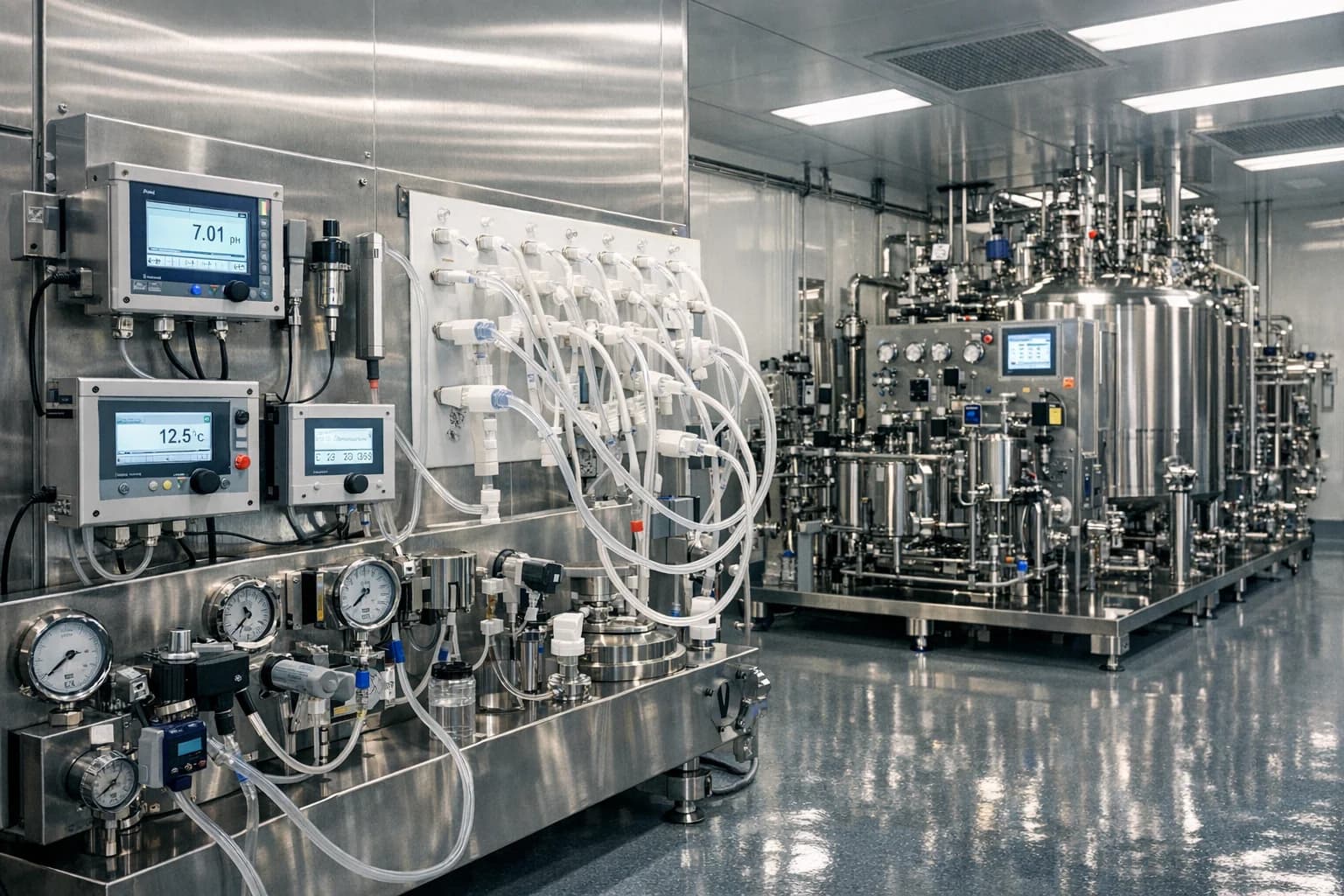
Operational architecture required to keep model outputs reliable in production, not just in proof-of-concept environments.
Systems that must be connected first
- MES/eBR, historian, and recipe management systems for process context.
- PAT instrumentation and lab systems for near real-time quality attributes.
- QMS, deviation, and CAPA platforms for closed-loop quality response.
- CMMS for equipment condition, maintenance history, and criticality ranking.
- Secure data platform with controlled access and audit trails by role.
Model risk and governance requirements
- Validation package must include intended use, risk classification, and retraining boundaries.
- Preserve ALCOA+ style data integrity practices across feature pipelines and model outputs.
- Map each model-assisted recommendation to SOP-controlled human decision authority.
- Maintain periodic performance review under formal quality governance.
Scale-up criteria before multi-site rollout
- Pilot success replicated across at least two product families or campaigns.
- Documented quality sign-off for model lifecycle controls and exceptions.
- No increase in critical deviations during autonomous recommendation phases.
- Inspection-ready evidence set for model development, validation, and operation.
Treat data quality, model lifecycle controls, and operator adoption as one integrated system; scaling only one layer usually destroys ROI.
Want to adapt this scenario to your factory?
Let's collaborate on data readiness, pilot selection, and ROI modeling.