
Move More Orders With Fewer Warehouse Delays
Practical implementation guide for distribution centers and transport networks seeking measurable throughput gains.
This scenario helps logistics leaders prioritize AI investments in cross-dock operations, forecast quality, and network-level decision speed.
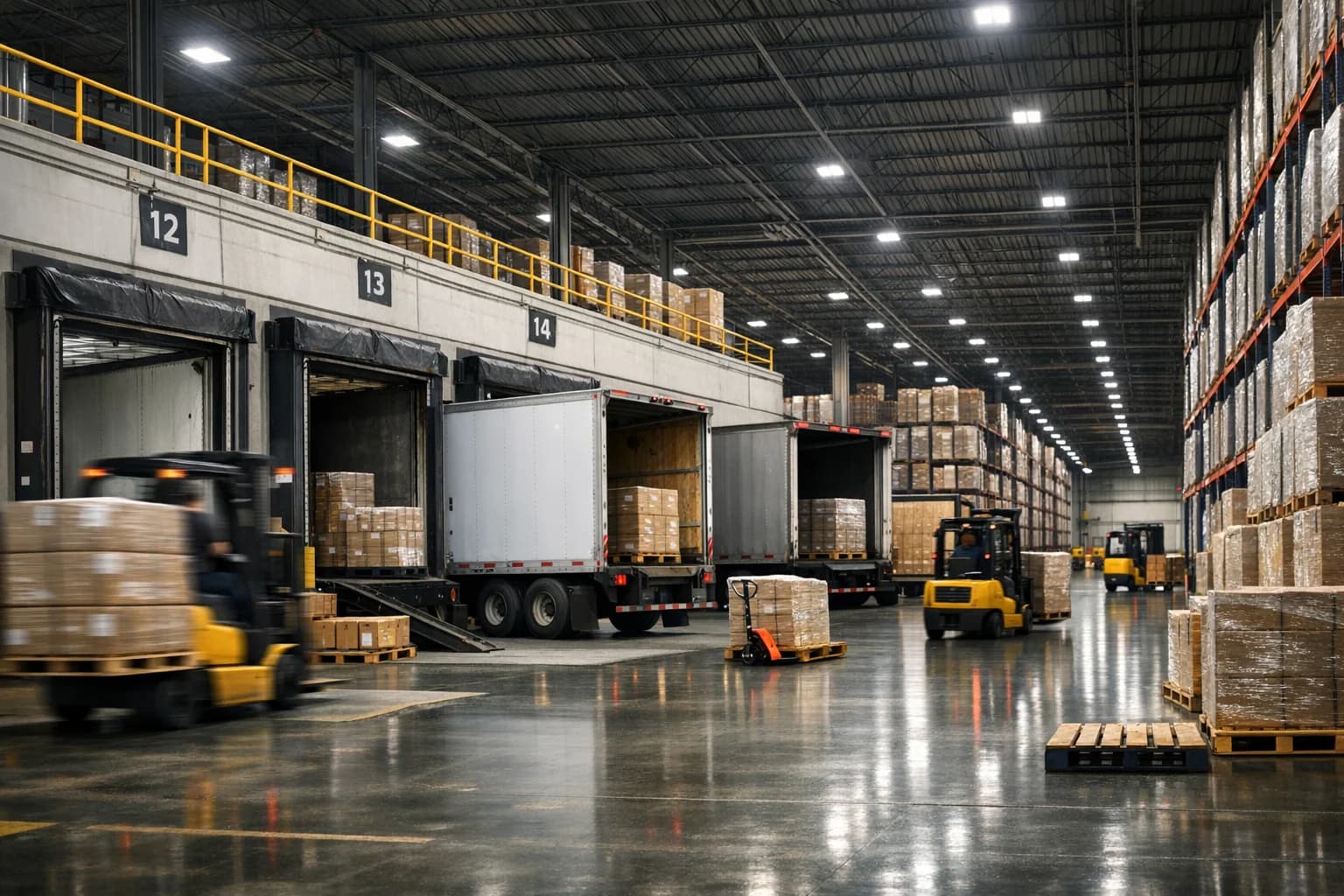
Scenario Metric References
| Metric | Value | Note |
|---|---|---|
| Global logistics market (2024) | $3.93T | |
| Global logistics outlook (2030) | $5.95T | |
| Warehousing market (2024) | $1.08T | |
| Warehousing outlook (2030) | $1.73T | |
| Retail + warehouse logistics (2024) | $1.3T | |
| Retail + warehouse outlook (2034) | $2.3T | |
| AI in logistics (2024) | $15-17B | |
| AI CAGR range | 26-46% | |
| Order cycle-time target | -10% to -25% through synchronized dock, slotting, and pick orchestration | |
| Forecast error target | -12% to -30% on lane- and SKU-level demand signals |
Executive Summary: Logistics Market Outlook and AI Opportunity
Global logistics reached about $3.93T in 2024 and is projected to grow to $5.95T by 2030 (2025-2030 CAGR ~7.2%).
Warehousing alone is growing faster, from about $1.08T in 2024 to $1.73T by 2030 (~8.1% CAGR). Retail and warehouse logistics are projected to move from $1.3T in 2024 to $2.3T by 2034.
AI in logistics is still a small base but growing rapidly, with multiple research firms projecting 10-20x growth over the next decade. For ecommerce, retail, and industrial logistics, AI + automation is becoming a core competitive requirement.
Operational leaders are consolidating TMS, WMS, ERP, and telematics data into a single decision layer for routing, labor, and inventory trade-offs.
AI market growth signals
- DataM Intelligence: $15.28B (2024) to $306.76B by 2032 (~42% CAGR).
- Straits Research: $16.95B (2024) to $348.62B by 2032 (~45.93% CAGR).
- Technavio: +$46.23B growth from 2024-2029 (~26.6% CAGR).
- Market.us: $549B by 2033 (~46.7% CAGR).
In the 2020s, logistics performance is increasingly defined by AI-driven routing, warehouse automation, and network intelligence.
Global Logistics and Warehousing Market Outlook and Growth Drivers
Market size, drivers, and structural trends.
Logistics and distribution
- Grand View Research estimates global logistics at $3.93T in 2024, reaching $5.95T by 2030.
- Global trade continues to expand despite shocks, keeping freight and distribution volumes on a long-term upward trend.
- Supply chain resilience is now a board-level priority, driving investment in visibility and planning.
Warehousing
- Global warehousing is projected to grow from $1.08T (2024) to $1.73T by 2030.
- General warehousing remains the largest segment, while cold storage is the fastest-growing segment.
- Rising labor costs and ecommerce volumes accelerate automation and AI investment.
Core drivers
- Ecommerce and omnichannel retail growth.
- Rising customer expectations for delivery speed and reliability.
- Need for resiliency against port congestion, supplier failures, and demand shocks.
AI in Logistics and Supply Chain: Market Size, Growth, and Adoption
Despite methodological differences, research firms agree on a steep adoption curve for AI in logistics and supply chain.
The common message: AI spend in logistics is moving from experimentation to strategic infrastructure in the next 5-10 years.
Market size range
- DataM Intelligence: $15.28B (2024) to $306.76B by 2032 (~42% CAGR).
- Straits Research: $16.95B (2024) to $348.62B by 2032 (~45.93% CAGR).
- Market.us: $549B by 2033 (~46.7% CAGR).
- Technavio: +$46.23B growth from 2024-2029 (~26.6% CAGR).
Implications
- Data platform and telemetry become a strategic asset.
- Routing and warehouse orchestration shift toward AI-driven optimization.
- Control-tower architectures emerge as the operational layer for decisions.

Transport AI: Routing, ETA, and Fleet Optimization Workflows
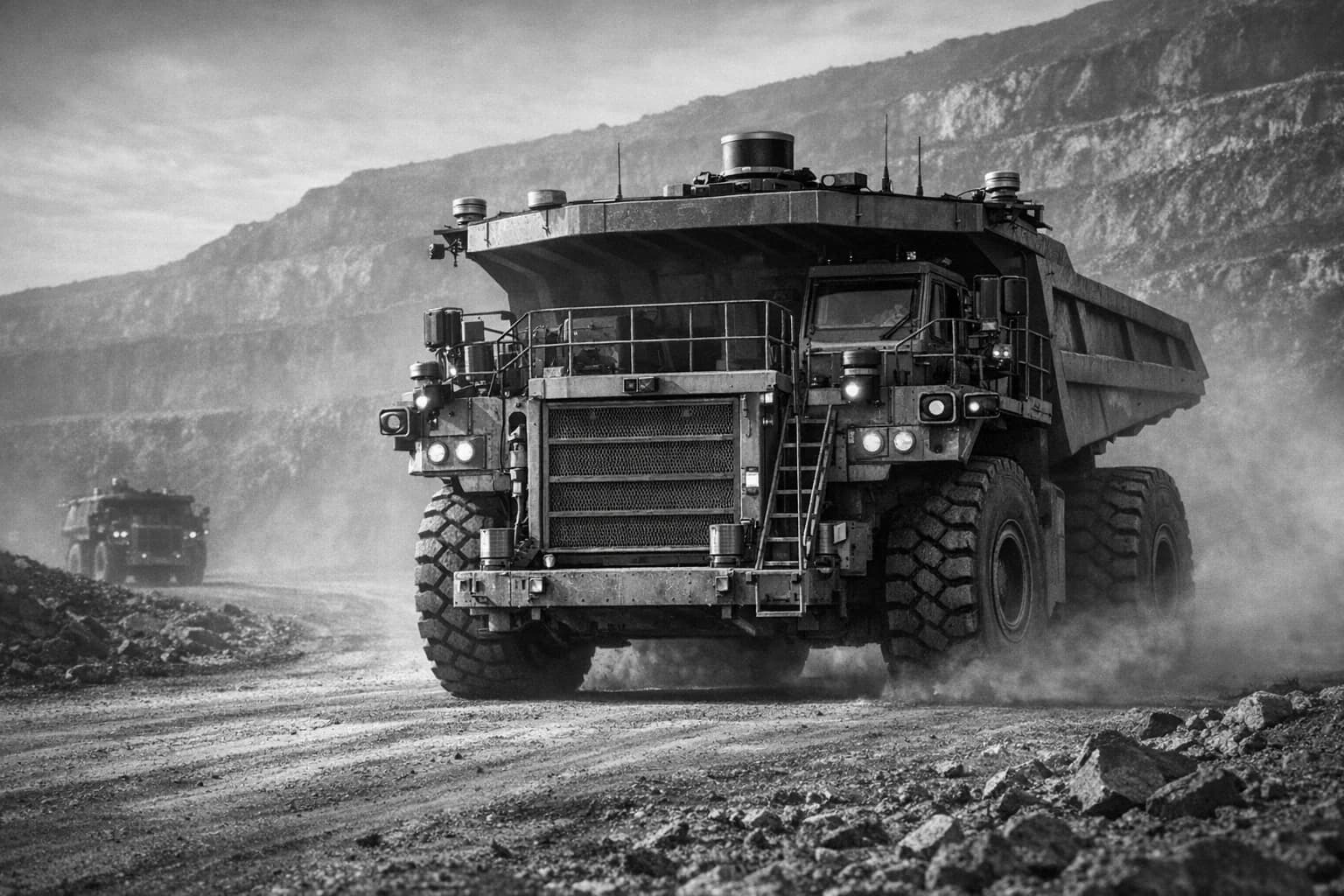
Dynamic routing and load matching reduce empty miles and improve SLA performance.
AI models evaluate traffic, weather, road constraints, driver hours, and delivery SLAs to build dynamic routing and load plans.
Logistics providers using AI-based routing can reduce fuel use, total distance, and empty returns.
Model stack
- Routing optimization: classic VRP solvers combined with reinforcement learning.
- ETA forecasting: gradient boosting (XGBoost, LightGBM), LSTM, and GNN models.
- Load matching and capacity planning using demand signals and real-time availability.
- Code example (Python): `eta_model = xgb.XGBRegressor().fit(X_train, y_train)`.
Operational impact
- 5-15% savings in fuel and distance in network-level routing programs.
- Load-vehicle matching adoption rose significantly between 2022-2024 in major carrier networks.
- Improved SLA adherence with dynamic route re-optimization during disruptions.
Warehouse and Fulfillment AI: Automation, Vision, and WMS
Automation and AI-driven planning boost throughput while reducing errors.
AMR, AGV, and robotics
- Autonomous mobile robots plan optimal pick routes and adapt to layout changes.
- AI-powered robot arms improve pick-and-place, packing, and palletizing accuracy.
Computer vision
- Product recognition, barcode reading, and quality inspection at higher speed and accuracy.
- Fewer picking and packing errors; faster exception handling.
WMS/LMS intelligence
- Shift and labor planning based on demand forecasts and workload prediction.
- Slotting and pick-path optimization for higher pick-per-hour KPIs.
- Reduced stock-out and overstock risk through AI-assisted replenishment.
- Code example (SQL): `SELECT sku, SUM(picks) AS daily_picks FROM pick_events WHERE event_date >= CURRENT_DATE - 30 GROUP BY sku ORDER BY daily_picks DESC;`.
- 20-40% uplift in pick efficiency with AMR/AGV.
- Lower error rates and improved worker safety.
- Throughput gains without proportional labor increases.

Demand, Inventory, and Network Planning with AI
AI improves demand forecasting by learning from sales history, promotions, weather, and channel behavior.
Better forecasts can reduce inventory 20-30% while maintaining service levels.
Demand and inventory
- Time-series models (Prophet, TFT, LSTM) combined with boosting for SKU-level forecasts.
- Dynamic segmentation and safety stock optimization to reduce working capital.
- Improved availability through demand sensing and rapid re-planning.
Network design and scenario analysis
- AI-optimized network design evaluates depot locations, transport modes, and service levels.
- Generative scenario analysis enables fast what-if modeling for disruptions.
Last-Mile and Customer Experience with GenAI
Last-mile delivery is a primary growth driver in ecommerce and FMCG logistics.
Generative AI can optimize delivery windows, slot pricing, and customer communication.
GenAI applications
- LLMs integrated with TMS/WMS data answer operational questions in natural language.
- Scenario generation for network shocks (port closure, demand surge, supplier failure).
- Personalized delivery promises based on location, demand, and fleet capacity.
AI Model Families and Reference Architectures
Task to model mapping
- Routing and ETA: time series + graph models + optimization (XGBoost, LSTM, GNN, RL).
- Warehouse demand and labor: time series forecasting (LSTM, GRU, Prophet, TFT).
- Slotting and workforce planning: prediction + optimization (GBM + LP/QP, genetic algorithms).
- Vision for quality and inventory: YOLOv8, EfficientNet, U-Net.
- Predictive maintenance: anomaly detection and time series (autoencoders, Isolation Forest, LSTM).
- Network design and scenarios: MIP solvers, RL, and LLM-assisted scenario generation.
Quantified Benefit Ranges and KPI Impact
- Inventory: 20-30% reduction in stock levels while preserving service levels.
- Warehouse efficiency: 20-40% improvement in picking productivity with AMR/AGV.
- Transport costs: 5-15% savings via dynamic routing and load optimization.
- Downtime and maintenance: 20-30% reduction in critical equipment downtime.
- Safety: lower incident rates with computer vision and proactive alerts.
Phased AI Execution Roadmap for Logistics and Warehousing
Start with visibility and data foundations, then scale quick-win pilots into integrated operations.
Phase 1 - Data foundation and visibility
- Map data sources: WMS, TMS, ERP, telematics, IoT sensors.
- Define KPIs: on-time delivery, fill rate, km/ton, pick rate, inventory turns.
- Build dashboards and data quality checks for key operational events.
Phase 2 - Quick wins and operational pilots
- Pilot demand and labor forecasting for one facility or SKU group.
- Launch ETA and dynamic routing pilots on selected lanes.
- Implement basic predictive maintenance for conveyors, sorters, or forklifts.
Phase 3 - Scale, integration, and automation
- Scale pilots across sites and routes.
- Introduce slotting optimization and advanced warehouse automation (AMR/AGV).
- Build a control-tower view across demand, inventory, transport, and warehouse.
- Total cost per order.
- On-time delivery and SLA adherence.
- Pick rate and labor utilization.
- Inventory turns and stock-out rate.

Leadership Recommendations and Execution Priorities
- Manage inventory and service level together: align AI projects with both cost and reliability targets.
- Treat transport and warehouse as one system: routing gains are limited without demand and stock intelligence.
- Prioritize data quality before model complexity.
- Invest in change management and workforce adoption.
- Embed cybersecurity and privacy by design in logistics AI platforms.
Sources and Further Reading
Market size and logistics outlook
- Grand View Research | Global Logistics Market Size and Outlook, 2024-2030https://www.grandviewresearch.com/industry-analysis/logistics-market
- Grand View Research | Global Warehousing Market Size and Outlook, 2024-2030https://www.grandviewresearch.com/industry-analysis/warehousing-market
- Allied Market Research | Retail and Warehouse Logistics Market to Reach $2.3T by 2034https://www.alliedmarketresearch.com/retail-and-warehouse-logistics-market-A15741
AI in logistics and supply chain
- DataM Intelligence | AI in Logistics Market Size, Growth, Trends Report 2025-2032https://www.datamintelligence.com/research-report/ai-in-logistics-market
- Straits Research | AI in Logistics Market Size Report, 2032https://straitsresearch.com/report/ai-in-logistics-market
- Technavio | AI in Logistics and Supply Chain Market Size 2025-2029https://www.technavio.com/report/ai-in-logistics-market-industry-analysis
- Market.us | AI in Logistics Market Size, CAGR 46.7%https://market.us/report/ai-in-logistics-market/
Warehouse AI and automation
- GSC Advanced Research and Reviews | AI-driven warehouse automation: a comprehensive review of systems (2024)https://gscarr.com/article/view/3460
- Rebus | AI-Driven Predictive Analytics Dominate Warehouse Management (2025)https://www.rebus.com/blog/ai-driven-predictive-analytics-dominate-warehouse-management/
- Ozvid | AI in Warehouse Management: Benefits, Cost, and Applications (2025)https://www.ozvid.com/ai-in-warehouse-management/
Smart supply chain and strategy
- McKinsey | Harnessing the power of AI in distribution operations (2024)https://www.mckinsey.com/capabilities/operations/our-insights/harnessing-the-power-of-ai-in-distribution-operations
- ResearchAndMarkets | Generative Artificial Intelligence in Logistics - Global Strategic Business Reporthttps://www.researchandmarkets.com/reports/5972875/generative-artificial-intelligence-in-logistics
Additional standards and market references (2023-2026)
- World Bank | Logistics Performance Indexhttps://lpi.worldbank.org/
- UNCTAD | Review of Maritime Transport 2024https://unctad.org/publication/review-maritime-transport-2024
- MHI | Annual Industry Reporthttps://www.mhi.org/publications/report
- DHL | Logistics Trend Radarhttps://www.dhl.com/global-en/home/insights-and-innovation/insights/logistics-trend-radar.html
Factory Owner Decision Playbook for Warehousing and Logistics
Decision support for leadership teams evaluating where to start, how to measure value, and how to de-risk rollout.
High-intent search queries this page targets
- AI for warehouse throughput improvement
- How to optimize dock scheduling with AI
- AI demand forecasting for distribution centers
- Route optimization and ETA prediction for logistics operators
90-day pilot KPI set
- Dock-to-stock and pick-to-ship cycle times.
- On-time in-full (OTIF) and late shipment incidence.
- Inventory accuracy and stockout frequency by priority SKU.
- Empty miles, fuel intensity, and route adherence.
- Labor productivity by zone and shift.
Investment and payback checkpoints
- Start with one node where congestion and delay costs are highest.
- Use baseline-normalized KPI tracking by lane, customer segment, and time window.
- Confirm planner override patterns to improve model recommendations before scaling.
- Tie network rollout to measurable gains in OTIF and cost-to-serve.
For most plants, value appears fastest when one quality KPI and one throughput/cost KPI are governed together under a single pilot owner.
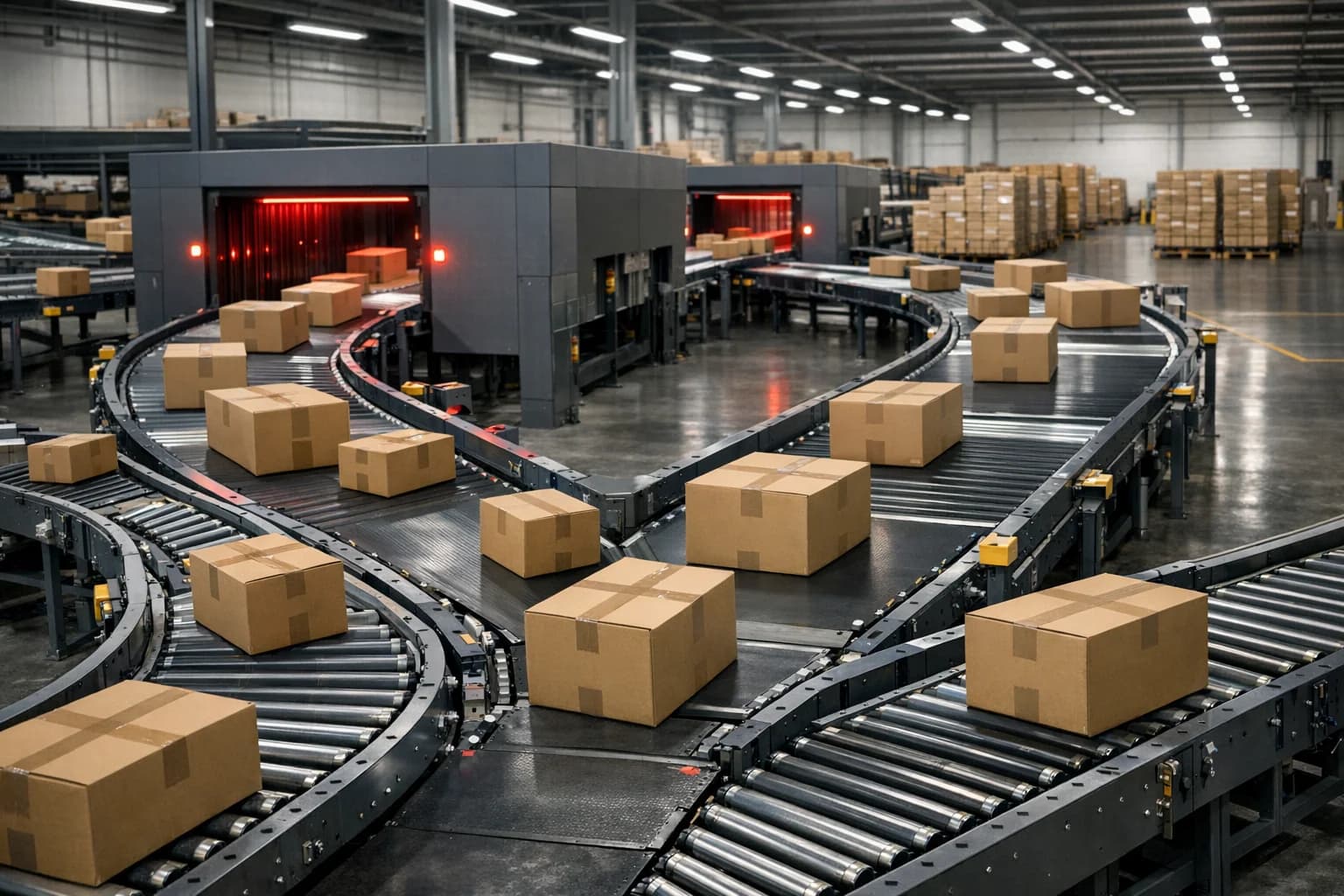
Production Data and Integration Blueprint for Logistics Networks
Operational architecture required to keep model outputs reliable in production, not just in proof-of-concept environments.
Systems that must be connected first
- WMS/WCS for real-time location, queue, and task state data.
- TMS and telematics for route, dwell-time, and ETA context.
- ERP order and finance data for service-level and margin tradeoff modeling.
- Yard management and dock scheduling events for bottleneck diagnosis.
- Workforce systems for shift allocation and productivity baselining.
Model risk and governance requirements
- Define manual override policy by risk class (customer-critical, regulatory, exception lane).
- Monitor drift in demand patterns after promotions, seasonal shifts, and channel changes.
- Maintain versioned policy constraints for routing, labor, and capacity allocation.
- Use incident postmortems to retrain on failure modes, not just average cases.
Scale-up criteria before multi-site rollout
- Pilot node sustains KPI gains over peak and non-peak cycles.
- Operations and planning teams demonstrate repeatable AI-assisted decision behavior.
- No service-level regressions while scaling to adjacent facilities.
- Executive scorecard confirms margin and service improvements together.
Treat data quality, model lifecycle controls, and operator adoption as one integrated system; scaling only one layer usually destroys ROI.
Want to adapt this scenario to your factory?
Let's collaborate on data readiness, pilot selection, and ROI modeling.