
AI for Mining: Market Outlook, Operational Use Cases, and Execution Strategy
Production transformation focused on efficiency, safety, and sustainability.
This scenario brings together mining market size, the rapid growth of AI investments, operational use cases, P&L and ESG impacts, and a pragmatic phased execution roadmap.
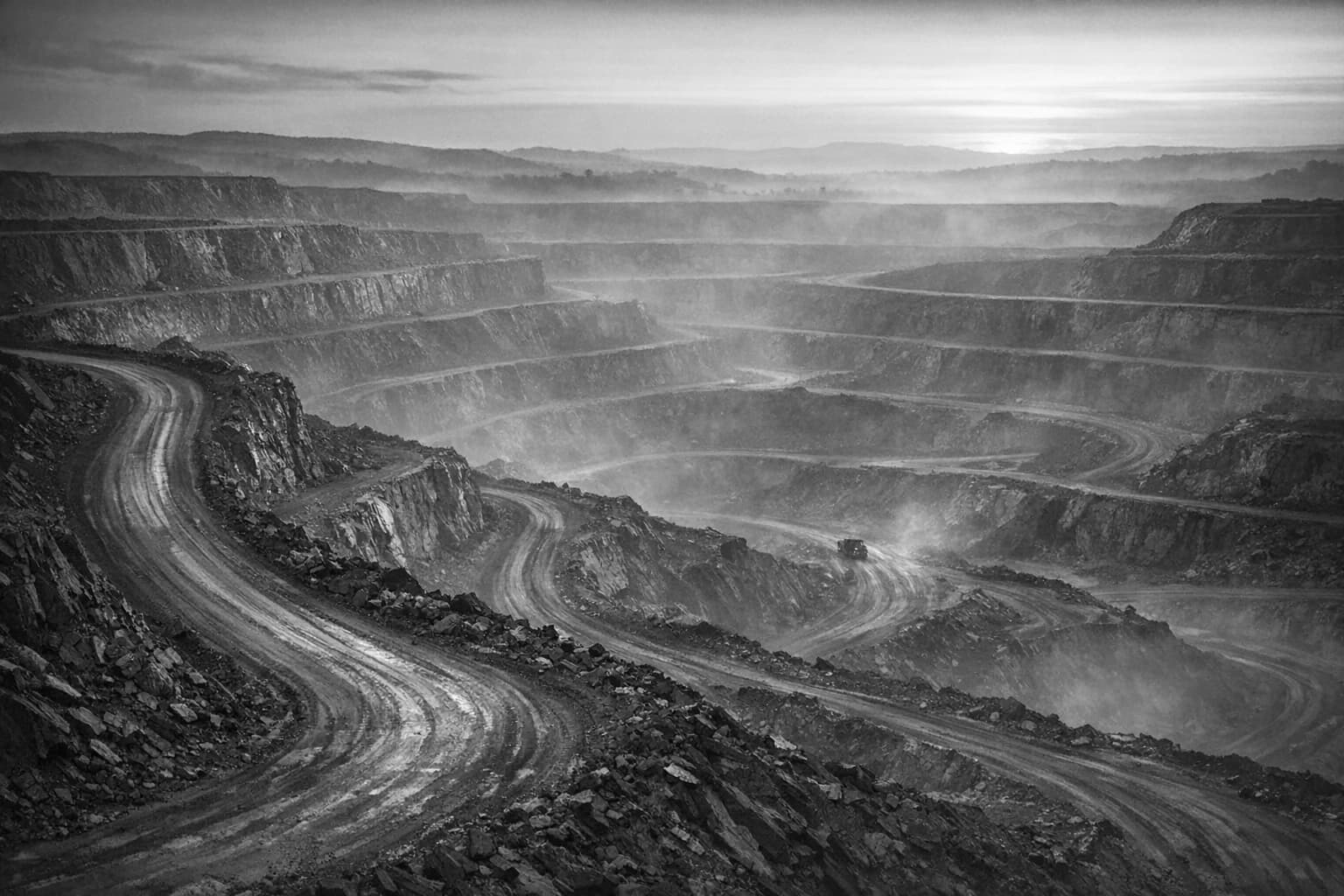
Executive Summary: Mining Market Outlook and AI Opportunity
The global mining market is estimated at $1.1–2 trillion in 2024 depending on definitions, with about 5% annual growth projected to reach $1.9–3.5 trillion by 2034–2035.
The AI in mining market is much smaller but growing rapidly; despite different methodologies, the shared message is clear: AI is becoming a strategic, high-growth technology in mining.
Critical minerals demand from the energy transition is pushing mines to optimize productivity, safety, and ESG performance with AI-driven automation.
AI market growth examples
- Some studies estimate $0.4B in 2024 growing to $2.1B by 2032 (22.4% CAGR).
- Other forecasts project $28.9B in 2024 rising to $478B by 2032, about 42% CAGR.
- Precedence Research projects $35.47B in 2025 to $828B by 2034, about 41.9% CAGR.
Core production impacts
- Efficiency and cost: autonomous haulage and automation have reported ~20% truck productivity gains.
- Predictive maintenance: AI can reduce downtime from equipment failures by 25–50% and cut maintenance costs.
- Safety: autonomous/remote equipment moves people away from high-risk zones; some sites report zero lost-time incidents.
- Sustainability: energy and ventilation optimization reduce consumption and environmental footprint.
Over the next 5–10 years, digital and AI-supported operations in metal and ore mining are shifting from competitive advantage to a de facto requirement for licensing and access to financing.
Global Mining Market Outlook and Macro Trends
A summary of market size, regional distribution, and macro trends.
Market size and growth
- Spherical Insights estimates the global mining market at ~$1.10T in 2024, reaching $1.90T by 2035 with 5.07% CAGR (2025–2035).
- Other research estimates the mining metals market at $1.13T in 2024 growing to $1.86T by 2034 (5.13% CAGR).
- Infosys projects the broader mining market from ~$2T in 2022 to ~$3.5T by 2032 (5.8% CAGR).
- Together these indicate a stable, foundational sector representing ~2–3% of global GDP.
Regional view
- Asia-Pacific (China, Australia, India, etc.) is the largest market in volume and value; metals, coal, and critical minerals lead.
- North and Latin America are strategically important for copper, gold, and lithium tied to the energy transition.
Macro trends
- Energy transition: by 2030, lithium and cobalt demand is expected to roughly double current capacity; copper demand may exceed current output by ~20%.
- ESG and licensing pressure: net-zero goals, water use, land impact, and community expectations make ESG performance critical.
- Productivity pressure: declining ore grades, deeper mines, and labor costs push unit costs higher, accelerating automation and AI.
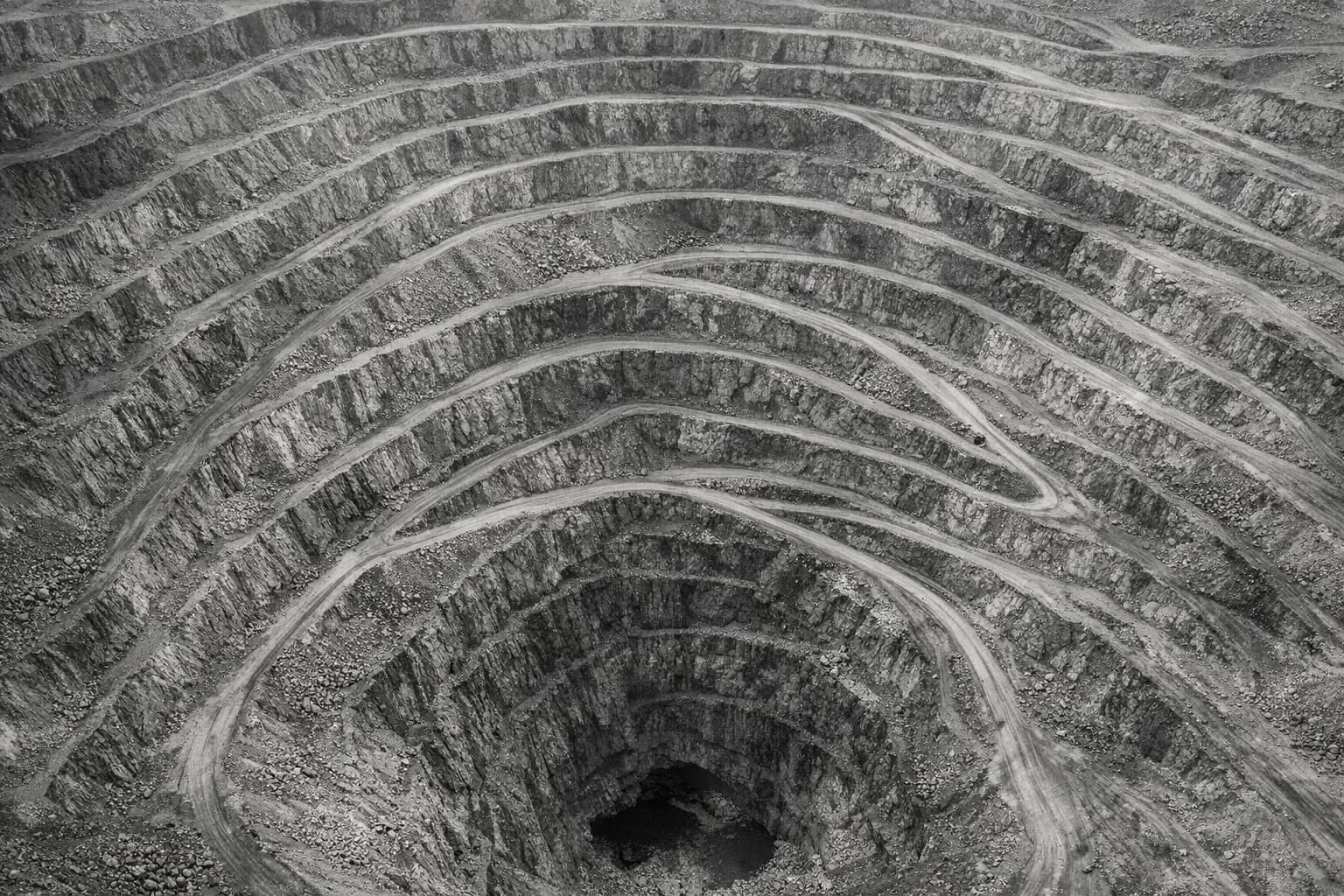
AI in Mining: Market Size, Growth, and Adoption
Across research firms, the trend is consistent: AI investment in mining is expected to grow at 20–40% annually over the next 5–10 years.
2.1 Market size and growth
- Congruence Market Insights: $418.1M in 2024 → $2.10B by 2032 (22.4% CAGR).
- Market.us and similar: broader definitions suggest 7B+ by 2033 (~22–23% CAGR).
- Precedence and aggressive scenarios: $35.5B in 2025 → $828B by 2034 (41.9% CAGR).
- Another aggressive scenario: $28.9B in 2024 → $478B by 2032 (42.15% CAGR).
2.2 Application and segment breakdown
- Exploration and geology: ML on satellite/geophysical/geochemical data, ore potential detection, 3D modeling.
- Production and maintenance: predictive maintenance, autonomous trucks and drills, operating parameter optimization.
- Safety and environment: collision prevention, gas monitoring, slope stability, vision analytics.
- Planning and supply: production planning, fleet optimization, demand and price scenarios.
- Precedence reports exploration as the largest 2024 segment (~25%), predictive maintenance as the fastest-growing, and metal mining as the leading end-user (~40%).
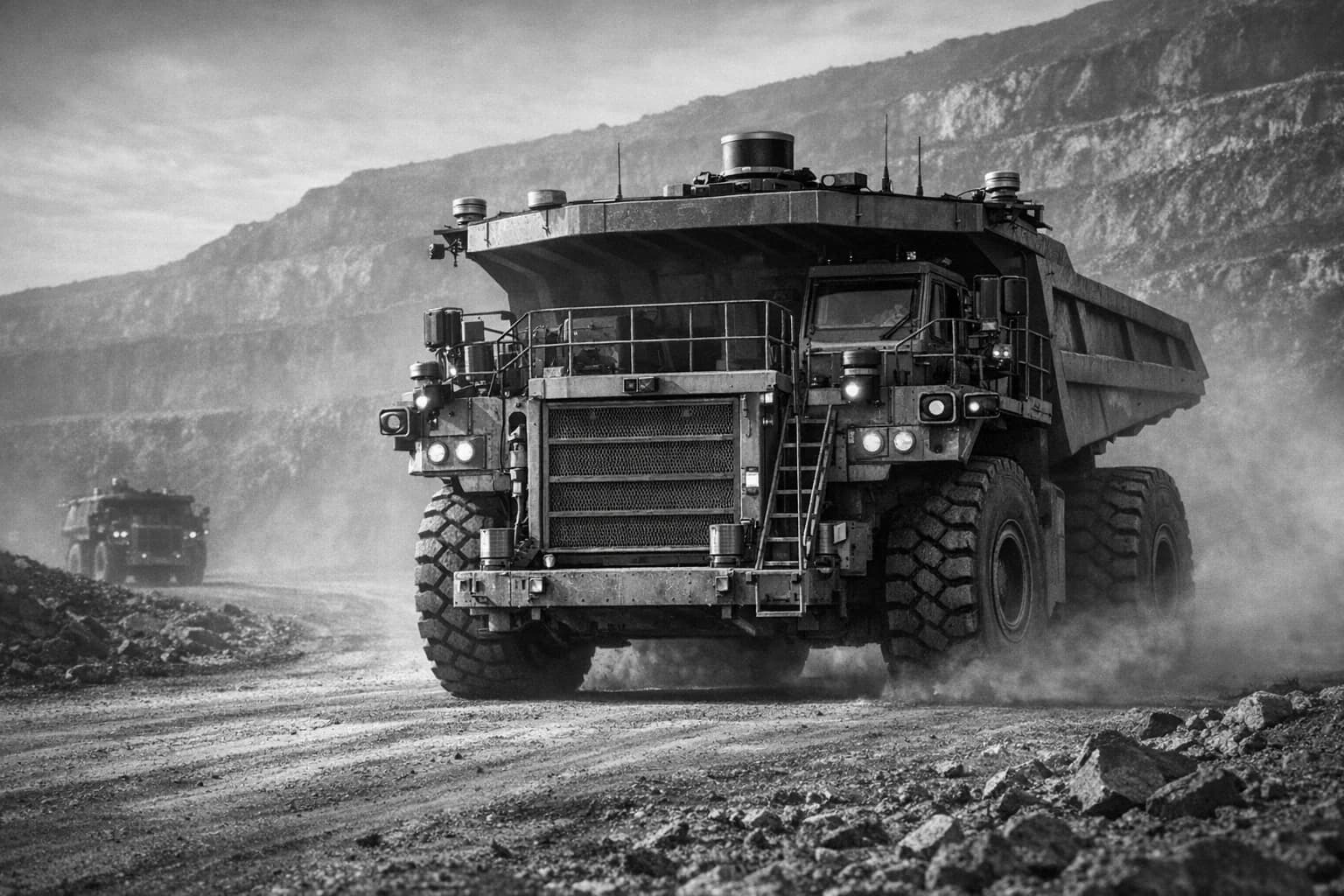
High-Impact AI Use Cases in Mining Operations
Highest-impact applications across field operations and plants.
3.1 Exploration and ore discovery
Geological exploration is data-heavy, expensive, and risky; satellite imagery, geophysical sections, drill data, and geochemical results are often analyzed manually.
Machine learning detects ore signatures, generates probability-based target maps, and accelerates 3D geological modeling.
- More information with fewer drill holes.
- Higher discovery success rates.
- Shorter exploration cycles and faster bankable projects.
3.2 Predictive maintenance and equipment efficiency
Excavators, haul trucks, conveyors, crushers, and mills carry high CAPEX/OPEX; unplanned failures raise unit costs.
Sensor data (vibration, temperature, pressure, current, oil analysis) enables AI models to predict failures weeks in advance.
- 25–50% reduction in downtime from equipment failures.
- Optimized maintenance budgets and lower spare part use.
- Higher uptime and longer equipment life.
- Edge gateways near pits/plants; buffered sync to cloud/VPC for training.
- Code example (Pseudocode): `anomaly_score = detect_anomaly(sensor_window)`.
3.3 Autonomous haulage, drilling, and fleet optimization
AHS uses AI, GPS, LiDAR, and radar to plan routes, prevent collisions, and operate 24/7.
Autonomous drills and loaders, combined with AI fleet management, optimize routes and loads.
- ~20% truck productivity gains reported in Western Australia.
- Some sites report up to 15% unit cost reduction and higher uptime.
- Lower idle time and reduced fuel and tire costs.
- Latency targets <250 ms for proximity alerts; redundancy via edge failover.
3.4 Safety: worker protection and risk reduction
Mining is historically high-risk with low visibility, blasting, gas and dust hazards, and heavy mobile equipment.
AI vision and sensors enable real-time monitoring of gas, dust, heat, ground movement, PPE compliance, and dangerous proximity.
- Fewer severe incidents and fatalities.
- Improved regulatory compliance.
- Lower insurance and compensation costs.
- Edge inference in tunnels for sub-200 ms PPE/proximity alarms.
3.5 Plant optimization: crushing, grinding, beneficiation
Crushing, grinding, flotation, and magnetic separation are energy-intensive and critical for recovery rates.
AI models variables like feed hardness, particle size distribution, circuit load, and energy draw to optimize settings.
- Lower energy per ton and reduced wear.
- Higher recovery and concentrate quality.
- Savings in reagent consumption.
- Digital twins for mill circuits and flotation cells to test setpoints safely.
3.6 Ventilation and energy optimization
In underground mining, ventilation is one of the largest energy consumers.
Ventilation-on-Demand (VoD) uses AI to adjust airflow based on people, equipment, and gas readings.
- 20–30% energy savings specific to ventilation.
- Lower total energy costs and improved carbon footprint.
- Resilience plans for telemetry loss; safe defaults on failure.
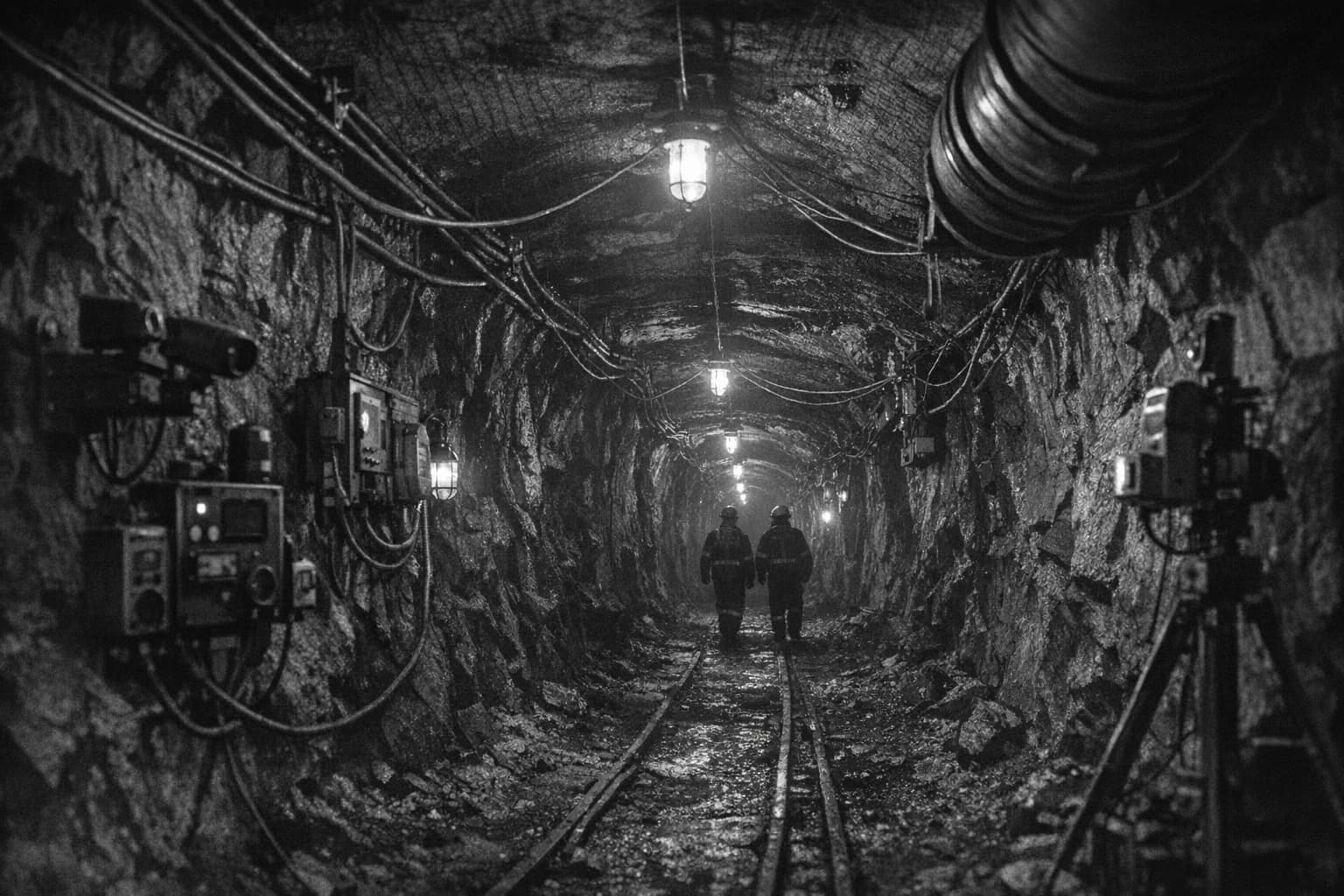
Quantified Benefits and KPI Impact for Mining
Efficiency / production
- Digital and automation technologies increased global mining productivity by ~2.8% annually between 2014–2016.
- Autonomous haulage sites report ~20% truck productivity gains.
- Inline latency targets <250 ms for safety/dispatch events.
Cost
- AHS deployments report up to 15% unit cost reduction.
- AI-driven predictive maintenance can cut failure-related downtime by 25–50%.
- Maintenance cost reduction 10–25% with condition-based work.
Safety
- Some operations report zero lost-time incidents after moving people away from high-risk zones.
- AI safety solutions can reduce fatigue-related incidents by ~15% and lower collision rates by up to 30%.
- Proximity/PPE alerts <200–250 ms support safe interventions.
Energy and sustainability
- Ventilation-on-Demand delivers 20–30% energy savings for ventilation systems.
- Plant and fleet optimization yields single- to double-digit reductions in energy intensity.
At large open-pit or underground metal mines, these improvements can translate into hundreds of millions of dollars in annual value.
Implementation Challenges, Safety, and Risk Controls
According to McKinsey, Deloitte, and others, the main barriers to digital/AI transformation in mining include:
Primary barriers
- Data and infrastructure gaps: unsensored equipment and weak underground connectivity.
- Cultural and organizational resistance: attachment to traditional methods and job loss concerns.
- Investment and ROI uncertainty: autonomous fleets and integrated control centers require heavy CAPEX.
- Talent shortage: lack of hybrid mining + data/automation profiles.
Technical risks
- Model errors (false positives/negatives).
- Cybersecurity risks for autonomous vehicles and control systems.
- Regulatory and safety compliance complexity.
- Strong data governance and OT cybersecurity.
- Clear use cases and measurable KPIs.
- Training and reskilling programs.
- Phased, risk-controlled pilots.
Phased AI Execution Roadmap for Mining
A pragmatic framework for mid-to-large metal and ore mining operations.
Start with quick wins and move toward scalable infrastructure.
Phase 1 - Digital foundation, data readiness, and safety baselines
- Clarify top pain points: unplanned downtime, safety incidents, energy costs.
- Perform data inventory and gap analysis; identify missing sensors.
- Add critical sensors and deploy reliable underground connectivity.
- Build dashboards for OEE, downtime, safety, and energy KPIs.
- Define defect/incident taxonomies; establish labeling SOPs for safety vision.
Phase 2 - Quick wins and operational pilots
- Predictive maintenance pilot: target crusher, mill, conveyor, and 5–10 haul trucks.
- Fleet and production optimization: analyze routes, cycle times, idle time, and waits.
- Safety monitoring PoC: camera + vision analytics for PPE and dangerous proximity.
- Assign an internal business owner and a digital transformation lead.
- Shadow mode for safety and dispatch decisions; HITL sign-off thresholds.
Phase 3 - Scale and move toward autonomy
- Roll predictive maintenance models across the critical equipment fleet.
- Introduce advanced dispatching and phased AHS trials where feasible.
- Deploy Ventilation-on-Demand in underground operations.
- Build real-time optimization for crushing and flotation.
- Converge operations into an integrated control center.
- Implement blue/green releases with rollback for fleet/QC models.
- Total cost per ton.
- Uptime and OEE.
- Incident rate and LTI (Lost Time Injury).
- Energy and emissions intensity.
- ESG ratings and regulatory compliance.
Leadership Recommendations and Execution Priorities
- Tie AI directly to P&L and ESG goals; frame each project around a measurable business target.
- Pick small, high-impact pilots: predictive maintenance, fleet optimization, and safety monitoring typically show the fastest results.
- Treat data and talent as strategic investments; build hybrid capabilities in mining and analytics.
- Move toward autonomy in phases: semi-autonomous first, then full autonomy where safe and permitted.
- Design governance and cybersecurity up front; plan cultural change early.
Sources and Further Reading
2.1 Mining market size and outlook
- Precedence Research | Mining Metal Market Size to Hit Around USD 1.86 Tn by 2034 (2025)https://www.precedenceresearch.com/mining-metal-market
- GlobeNewswire / The Business Research Company | Mining Global Market Report 2024https://www.globenewswire.com/news-release/2024/03/07/2841994/28124/en/Mining-Global-Market-Report-2024.html
- Infosys Knowledge Institute | Mining Industry Outlook 2024 (2024)https://www.infosys.com/iki/research/mining-industry-outlook2024.html
- Spherical Insights | Top 20 Companies in Mining Market (2024–2035)https://www.sphericalinsights.com/blogs/top-20-companies-in-mining-market-2024-2035
- Statista | Topic: Mining (global statistics overview)https://www.statista.com/topics/1143/mining/
2.2 AI in mining: market size and segments
- Congruence Market Insights | AI in Mining Market – Region-Wise Market Insights (2025)https://www.congruencemarketinsights.com/report/ai-in-mining-market
- Technavio | AI In Mining Market Analysis, Size, and Forecast 2025–2029 (2025)https://www.technavio.com/report/ai-in-mining-market-industry-analysis
- Precedence Research | AI in Mining Market Size to Hit USD 828.33 Billion by 2034 (2025)https://www.precedenceresearch.com/ai-in-mining-market
- Market.us | AI in Mining Market Size, Statistics, Share | CAGR of 22.7% (2024)https://market.us/report/ai-in-mining-market/
- Yahoo Finance | AI in Mining Market to Hit USD 478.29 Billion by 2032 (2025)https://finance.yahoo.com/news/ai-mining-market-hit-usd-140000270.html
2.3 Predictive maintenance, fleet management, productivity
- SymX.ai | Revolutionizing Predictive Maintenance in the Mining Industry with AI (2025)https://symx.ai/revolutionizing-predictive-maintenance-in-the-mining-industry-with-ai
- Mining-Technology.com | Predictive maintenance and the rise of AI in mining (2024)https://www.mining-technology.com/features/predictive-maintenance-and-the-rise-of-ai-in-mining/
- Oracle | Using AI in Predictive Maintenance: What You Need to Know (2024)https://www.oracle.com/tr/scm/ai-predictive-maintenance/
- SmartDev | AI in Mining: Top Use Cases You Need To Know (2025)https://smartdev.com/ai-use-cases-in-mining/
- Omdena | AI in Mining: Guide for Sustainability and Cost Optimization (2025)https://www.omdena.com/blog/ai-in-mining-guide
- Omdena | AI Use Cases in Mining – Processing & Plant (2025)https://www.omdena.com/blog/ai-use-cases-in-mining
- McKinsey & Company | Behind the mining productivity upswing: Technology-enabled transformation (2018)
- McKinsey & Company | How digital innovation can improve mining productivity (PDF, mckinsey.de)
- SNC Technologies | McKinsey Highlights the Role of AI in the Mining Industry (2025)https://snctechnologies.com/mckinsey-highlights-the-role-of-ai-in-the-mining-industry/
2.4 Autonomous haulage, robotics, safety
- Deloitte | Improving Health and Safety in Mining with Automation, AI, and IoT (2025)https://www.deloitte.com/us/en/Industries/energy/articles/mining-ai-automation-for-health-safety.html
- Global Mining Review | AI: A game-changer for mine safety (2024)https://www.globalminingreview.com/mining/09082024/ai-a-game-changer-for-mine-safety/
- MiningDoc.tech (Q&A) | How are AI-powered autonomous haul trucks improving efficiency and safety in mining? (2025)https://www.miningdoc.tech/question/how-are-ai-powered-autonomous-haul-trucks-improving-efficiency-and-safety-in-mining/
- MiningDoc.tech (Q&A) | How is technology improving safety in mining operations? (2025)https://www.miningdoc.tech/question/how-is-technology-improving-safety-in-mining-operations/
- Journal WJAETS | Implementing autonomous haulage trucks in mining: Safety benefits and management challenges (2025)https://journalwjaets.com/content/implementing-autonomous-haulage-trucks-mining-safety-benefits-and-management-challenges
- MiningDoc.tech (blog) | The role of robotics in improving safety and efficiency in mining operations (2025)https://www.miningdoc.tech/2025/06/04/the-role-of-robotics-in-improving-safety-and-efficiency-in-mining-operations/
- LinkedIn – Andy Miller | Under the Earth: AI Redefines the Mining Industry (2024)https://www.linkedin.com/pulse/under-earth-ai-redefines-mining-industry-andy-miller-s8hzc
- LinkedIn – David Alonso | AI adoption aims to lift mine safety (2024)https://www.linkedin.com/posts/davidalonso_ai-adoption-aims-to-lift-mine-safety-activity-7200616694002704384-DtoC
Governance, MLOps, and Deployment Patterns for Mining
Safety-critical mining AI requires disciplined data governance, shadow rollouts, and resilient edge deployments.
Data quality and labeling
- Event/incident taxonomies for PPE, proximity, and equipment faults; dual-review labeling for safety-critical data.
- Dataset versioning tied to pit/level, equipment ID, lighting conditions, and environmental factors; audit-ready metadata.
HITL and rollout safety
- Shadow mode for safety and dispatch decisions before automation; operator confirmation thresholds by severity.
- Per-fleet and per-plant rollback plans; FP/FN guardrails for autonomous actions.
Monitoring, drift, and resilience
- Latency/uptime SLOs (<200–250 ms; 99%+) with watchdogs and fail-safe defaults.
- Drift monitoring for dust/lighting/weather shifts; retrain triggers tied to season and bench elevation.
- Edge buffering to handle connectivity loss; resumable sync to VPC/cloud.
Deployment patterns
- Edge inference at shovels, trucks, crushers; cloud/VPC training with PrivateLink; no raw PII leaving VPC.
- Blue/green releases with rollback for fleet dispatch and safety models; version pinning for audits.
Security and compliance
- OT network isolation, signed binaries, encryption in transit/at rest.
- Role-based access and audit trails for model/parameter changes and safety overrides.
Why Veni AI for Mining Transformation
Veni AI brings mining domain experience plus end-to-end delivery: data, labeling QA, evaluation harnesses, secure connectivity, and resilient MLOps.
What we deliver
- Predictive maintenance and fleet optimization pipelines with edge gateways and CMMS/dispatch integration.
- Safety vision stacks for PPE/proximity with <200–250 ms latency and health checks.
- Plant optimization (crushing, grinding, flotation) with digital twins and rollbackable releases.
Reliability and governance
- Shadow-mode launch, HITL approvals, rollback/versioning baked into releases.
- Monitoring of drift, anomaly, latency, and uptime; alerts routed to control center, maintenance, and safety leads.
Pilot-to-scale playbook
- 8–12 week PoCs (predictive maintenance, safety vision); 6–12 month scale across fleets and plants with change management and operator training.
- Secure connectivity (VPC, PrivateLink/VPN), OT isolation, zero secrets in logs.
Higher uptime, safer operations, and lower energy per ton with governed, reliable AI.
Want to adapt this scenario to your factory?
Let’s collaborate on data readiness, pilot selection, and ROI modeling.