
Improve Forecast Accuracy and Asset Uptime in Renewables
How utility-scale renewable portfolios deploy AI for better dispatch quality and asset economics.
This scenario supports energy operators evaluating AI for wind, solar, storage, and control-center workflows under real operational constraints.
Scenario Metric References
| Metric | Value | Note |
|---|---|---|
| Global market (2024) | $1.1–1.5T | |
| Low‑carbon share (2024) | 40.9% | |
| AI market (2032–2034) | $75–130B | |
| AI CAGR range | 17–30% | |
| Forecast error reduction | 10–30% MAE/RMSE improvement | |
| Uptime target | 99.5%+ for forecasting/dispatch services | |
| Pilot-to-scale timeline | 8–12 week pilot; 6–12 month portfolio rollout | |
| Forecast accuracy target | +8% to +22% depending on horizon and data richness | |
| Curtailment reduction target | -5% to -18% with coordinated forecasting and storage strategies |
Executive Summary: Renewable Energy Market and AI Opportunity
The global renewable energy market sits roughly in the $1.1–1.5 trillion range across 2023–2025.
AI in Energy is expected to grow from roughly $10–20B in the mid‑2020s to $75–130B+ in the early 2030s.
Grid congestion, curtailment, and storage economics are pushing operators to deploy AI for forecasting and dispatch.
Market size examples
- NovaOne: $1.14T in 2023, $1.34T in 2024, $5.62T by 2033 (CAGR 17.3%).
- Straits: $1.085T in 2024, $2.27T by 2033 (CAGR 9.47%).
- BCC Research: $1.3T in 2024, $2T by 2029 (CAGR 8.7%).
- Roots/WEF/IRENA: $1.54T in 2025 → $5.79T by 2035 (CAGR 14.18%).
How AI impacts renewable operators
- Higher forecasting accuracy reduces balancing costs.
- Predictive maintenance lowers downtime on turbines, inverters, and batteries.
- Grid and plant optimization lift energy efficiency and revenues.
- Demand response, VPPs, and flexibility market participation become easier.
- Better compliance with ESG targets and regulations.
As renewable penetration grows, AI is no longer optional; it is core infrastructure for forecasting, maintenance, and flexibility management.
Global Renewables Market Outlook and Grid Dynamics
Market size, generation mix, and capacity growth at a glance.
1.1 Market size and growth
- NovaOne: $1.14T in 2023, $1.34T in 2024, $5.62T by 2033 (2024–2033 CAGR 17.3%).
- Straits Research: $1.085T in 2024, $2.27T by 2033 (CAGR 9.47%).
- BCC Research: $1.3T in 2024, $2T by 2029 (CAGR 8.7%).
- Roots Analysis / WEF & IRENA: $1.54T in 2025, $5.79T by 2035 (CAGR 14.18%).
1.2 Generation mix and capacity
- In 2024, low‑carbon sources supplied 40.9% of global electricity.
- Solar reached 6.9% share and wind 8.1%; solar has been the fastest‑growing source for 20 years.
- Global renewable capacity reached 4,448 GW by end‑2024; capacity growth hit a record 15.1%.
Trend
- As variable renewables rise, forecasting, optimization, and flexibility solutions become critical.
AI in Energy: Market Size, Growth, and Adoption
Definitions and segments differ, but all studies point to strong growth.
2.1 Market size and CAGR
- DataM Intelligence: $9.89B in 2024, $99.48B by 2032; 33.45% CAGR.
- Allied Market Research: $5.4B in 2023, $14.0B by 2029; 17.2% CAGR.
- ResearchAndMarkets: $19.03B in 2024, $50.9B by 2029, $129.63B by 2034; 21.75% + 20.56% CAGR.
- Precedence Research: $18.10B in 2025, $75.53B by 2034; 17.2% CAGR.
- Maximize Market Research: $11.53B in 2024, $93.41B by 2032; 29.88% CAGR.
2.2 Segments and renewables focus
- Demand response is the largest segment.
- Renewable energy management is the fastest‑growing segment.
- Software solutions and cloud deployment dominate.
- Utilities (generation + distribution) are the largest end users.
AI in Energy is positioned as a fast‑growing strategic market reaching $75–130B+ in the 2030s.

High-Impact AI Use Cases in Renewables
Core use cases across wind, solar, and hydro with operational impact.
3.1 Generation forecasting – wind, solar, hydro
Forecast errors in variable generation create imbalance costs and volatility.
AI combines weather, historical output, SCADA, and satellite data to improve accuracy.
- Time‑series ML, LSTM/GRU, and transformer models reduce MAE/RMSE.
- Better forecasts reduce balancing costs and improve market bidding.
- Grid stability improves.
- NWP + satellite + onsite sensors fused; horizon from minutes to day-ahead.
- Code example (Python): `forecast = tft_model.predict(weather_features)`.
3.2 Predictive maintenance – turbines, PV, BESS
Vibration, temperature, and acoustic signals enable early fault detection on critical components.
PV data (I–V curves, temperature, output) identifies shading, soiling, and faults.
- Double‑digit reductions in downtime and failure frequency.
- Longer asset life and lower maintenance costs.
- Higher operational efficiency.
- Edge gateways at turbines/inverters; buffered sync to VPC for training.
3.3 Grid management, flexibility, and VPPs
Coordination of distributed PV, small wind, batteries, and EVs is becoming a central challenge.
AI optimizes demand forecasting and flexibility to orchestrate VPPs.
- Higher forecasting accuracy improves dispatch and flexibility needs.
- VPPs enable automated participation in day‑ahead and balancing markets.
- Smart grid functions (voltage/frequency control, fault management) improve.
- Edge/FOG nodes for microgrids; cloud/VPC orchestration with PrivateLink.

Energy Efficiency, Demand Management, and Storage Optimization
4.1 Demand response and dynamic pricing
AI uses smart meter and behavioral data to forecast demand profiles.
Dynamic pricing and incentives shift load away from peak hours.
- Peak load reduction and lower grid stress.
- Segment‑specific consumption optimization.
- Lower total energy cost.
- PII-safe analytics with anonymization/aggregation.
4.2 Energy storage and battery optimization
AI optimizes charge/discharge based on price, demand, and production forecasts.
Battery state of health (SoH) monitoring extends asset life.
- Reduced curtailment and balancing needs.
- Shorter payback periods for storage investments.
- Smoother renewable integration.
- Edge inference for safety-critical BMS signals; cloud/VPC for portfolio optimization.

Business Models for Utilities, IPPs, and Suppliers
Utilities (generation + distribution)
- Grid optimization, demand management, loss detection.
- AI‑assisted participation in flexibility markets.
- Partnerships with AI‑as‑a‑Service providers.
- Governed rollout with change control and rollback for dispatch logic.
Renewable developers and IPPs
- Revenue optimization via better forecasting.
- CAPEX/OPEX optimization with predictive maintenance.
- Stronger “reliable output” story for financiers.
- Secure connectivity for remote sites (VPN/PrivateLink); no raw PII moved.
Technology and OEM suppliers
- Embedded predictive maintenance at OEM level.
- RaaS (Reliability as a Service) contracts as new revenue streams.
- Versioned rollouts and rollback for firmware/ML updates.
Quantified Benefits and KPI Impact
Forecasting (wind/solar)
- 10–30% reduction in forecast error.
- Lower balancing costs and curtailment need.
- Fewer reserve purchases and improved bids.
Predictive maintenance (wind, solar, BESS)
- 20–40% reductions in downtime and failure frequency.
- Longer asset life and lower maintenance cost.
- Higher availability improves PPA performance.
Demand and grid optimization
- Peak‑load reduction delays network investments.
- Meaningful reductions in operating costs.
- Reliability and SAIDI/SAIFI improvements.
Financial impact depends on scale; large portfolios can reach tens of millions of dollars annually.
Future Scenarios for Energy Markets and Regulation
Scenario 1 – AI‑driven smart grids with high renewable penetration
- Forecasting, storage, and flexibility optimization become mandatory.
- VPPs and flexibility markets expand rapidly.
Scenario 2 – Predictive maintenance and digital twins become standard
- Most wind and solar assets operate with AI‑based maintenance.
- Failure‑driven downtime becomes the exception.
Scenario 3 – Demand‑side digitalization and prosumers rise
- Smart meters, EVs, and building batteries turn consumers into flexibility providers.
- AI orchestrates millions of small assets.
Scenario 4 – Regulation and cybersecurity become decisive
- Transparency and responsibility requirements tighten.
- Cybersecurity becomes a key risk area.
Phased AI Execution Roadmap for Renewables
An actionable framework for a wind + solar portfolio operator or a distribution utility.
Phase 1 - Baseline and data foundation
- Clarify objectives: reduce downtime, lift market revenues, enter flexibility markets.
- Collect SCADA, inverter, turbine data, plus load and price series.
- Set up a central data platform and core dashboards.
- Define defect/event taxonomies; labeling SOPs for imagery and SCADA anomalies.
- Plan edge connectivity/resilience for remote sites.
Phase 2 - Quick wins and pilot programs
- Forecasting PoC with LSTM/GRU/transformers to cut error rates.
- Predictive maintenance pilot for 5–10 turbines and key inverters.
- Demand forecast / DR pilot in a selected region.
- Shadow mode + HITL for dispatch/curtailment recommendations.
Phase 3 - Scale and new business models
- Scale successful solutions across the portfolio.
- Deploy AI‑based portfolio optimization for VPP and flexibility markets.
- Tie AI investments to ESG targets to strengthen financing.
- Blue/green releases with rollback for forecasting/dispatch services.

Leadership Recommendations and Execution Priorities
- Put AI at the center of the energy transition strategy, not just as efficiency projects.
- Design data governance and cybersecurity from day one.
- Start with quick ROI in forecasting and maintenance.
- Plan early for distributed energy and flexibility markets.
- Build internal capability while requiring transparency and knowledge transfer from partners.
Sources and Further Reading
10.1 Renewables market size and trends
- BCC Research (Renewable Institute) | Global Renewable Energy Market Projected to Hit $2 Trillion by 2029https://www.renewableinstitute.org/global-renewable-energy-market-projected-to-hit-2-trillion-by-2029/
- NovaOne Advisor | Renewable Energy Market Size & Trend Report, 2024-2033https://www.novaoneadvisor.com/report/renewable-energy-market
- Straits Research | Renewable Energy Market Size, Growth, Trendshttps://straitsresearch.com/report/renewable-energy-market
- Roots Analysis | Renewable Energy Markethttps://www.rootsanalysis.com/renewable-energy-market
- Ember | World surpasses 40% clean power as renewables see record risehttps://ember-energy.org/latest-updates/world-surpasses-40-clean-power-as-renewables-see-record-rise/
10.2 AI in Energy market size and segments
- DataM Intelligence | AI In Energy Market Size, Share, Growth Report 2025-2032https://www.datamintelligence.com/research-report/ai-in-energy-market
- Allied Market Research | AI in Energy Market: Growth, Trends & Forecast (2024-2029)https://www.alliedmarketresearch.com/ai-in-energy-market-A12587
- ResearchAndMarkets (GlobeNewswire) | AI in Energy Market Opportunities and Strategies to 2034https://www.globenewswire.com/news-release/2025/05/29/3090566/0/en/AI-in-Energy-Market-Opportunities-and-Strategies-to-2034-Util...
- Precedence Research | AI in Energy Market Size to Hit USD 75.53 Billion by 2034https://www.precedenceresearch.com/ai-in-energy-market
- Maximize Market Research | AI in Energy Market – Global Industry Analysis and Forecasthttps://www.maximizemarketresearch.com/market-report/ai-in-energy-market/166396/
10.3 Forecasting, optimization, and predictive maintenance
- Pdata.ai | Predictive Analytics in Renewable Energyhttps://pdata.ai/en/blog-detail/predictive-analytics-renewable/
- IJSRA | AI in renewable energy: A review of predictive maintenance and optimization (PDF)https://ijsra.net/sites/default/files/IJSRA-2024-0112.pdf
- IJSRET | AI-driven predictive maintenance and optimization of renewable energy systems (PDF)https://ijsra.net/sites/default/files/IJSRA-2024-1992.pdf
- IJSRET | Harnessing AI for smart demand forecasting in renewable-powered grids (PDF)https://srrjournals.com/ijsret/sites/default/files/IJSRET-2025-0029.pdf
- Forbes Tech Council | AI-Powered Predictive Maintenance For Renewable Energy Infrastructurehttps://www.forbes.com/councils/forbestechcouncil/2024/06/13/practical-applications-of-ai-powered-predictive-maintenance-for-ren...
10.4 General energy/AI applications and grid management
- DataM Intelligence | AI in Energy applications and use caseshttps://www.datamintelligence.com/research-report/ai-in-energy-market
- Allied Market Research | AI in Energy segments and use caseshttps://www.alliedmarketresearch.com/ai-in-energy-market-A12587
- ResearchAndMarkets | AI in Energy segmentation and demand response focushttps://www.globenewswire.com/news-release/2025/05/29/3090566/0/en/AI-in-Energy-Market-Opportunities-and-Strategies-to-2034-Util...
- Precedence Research | Component, deployment, end-user breakdownshttps://www.precedenceresearch.com/ai-in-energy-market
- Maximize Market Research | Data-driven grid optimization analyseshttps://www.maximizemarketresearch.com/market-report/ai-in-energy-market/166396/
Additional standards and market references (2024-2026)
- IEA | Renewables 2024https://www.iea.org/reports/renewables-2024
- IRENA | Renewable Capacity Statistics 2025https://www.irena.org/Publications/2025/Mar/Renewable-Capacity-Statistics-2025
- NREL | Forecasting and grid integration resourceshttps://www.nrel.gov/grid/forecasting.html
- U.S. EIA | Short-Term Energy Outlookhttps://www.eia.gov/outlooks/steo/
Governance, MLOps, and Deployment Patterns for Energy
Grid and generation AI must meet reliability, security, and compliance requirements with controlled rollouts.
Data quality and labeling
- Time-series and imagery taxonomies for SCADA, weather, and component faults; dual review for safety-critical labels.
- Dataset versioning tied to plant/site, asset, and conditions; audit-ready metadata.
HITL and rollout safety
- Shadow mode for dispatch/curtailment and alarms; HITL approvals for critical actions.
- Per-site rollback plans; FP/FN guardrails for safety and compliance.
Monitoring, drift, and resilience
- Latency/uptime SLOs (<200–400 ms for control surfaces; 99.5%+ uptime) with watchdogs and fail-safe defaults.
- Drift monitoring for weather/regime shifts; retrain triggers tied to seasonality and asset aging.
- Edge buffering for remote sites; resumable sync to VPC/cloud.
Deployment patterns
- Edge inference at turbines/inverters/BESS; cloud/VPC training with PrivateLink; no customer PII moved.
- Blue/green releases with rollback for forecasting/dispatch models; version pinning for regulators.
Security and compliance
- Network segmentation (OT/IT), signed binaries, encryption in transit/at rest.
- Role-based access and audit trails for model/parameter changes and overrides.
Why Veni AI for Renewable Energy Transformation
Veni AI brings renewables experience with end-to-end delivery, edge+cloud architectures, and production-grade MLOps.
What we deliver
- Forecasting stacks (wind/solar/load/price) with retrain cadence and performance SLAs.
- Predictive maintenance for turbines/inverters/BESS with edge buffering and CMMS integration.
- VPP/flex optimization and demand response orchestration with secure connectivity.
Reliability and governance
- Shadow-mode launch, HITL approvals, rollback/versioning, and release checklists per site.
- Monitoring of drift, anomaly, latency, and uptime; alerts to control center, maintenance, and operations.
Pilot-to-scale playbook
- 8–12 week PoCs for forecasting/maintenance; 6–12 month rollout across portfolios with change management and training.
- Secure connectivity (VPC, PrivateLink/VPN), OT isolation, zero secrets in logs.
Higher availability, better market revenues, and lower balancing costs with governed, reliable AI.
Factory Owner Decision Playbook for Renewable Energy Operators
Decision support for leadership teams evaluating where to start, how to measure value, and how to de-risk rollout.
High-intent search queries this page targets
- AI for wind and solar generation forecasting
- Battery storage dispatch optimization with AI
- How to reduce renewable curtailment using predictive control
- Predictive maintenance analytics for renewable assets
90-day pilot KPI set
- Day-ahead and intraday forecast error by site and weather regime.
- Battery round-trip and dispatch efficiency under market constraints.
- Curtailment volume and avoidable imbalance cost.
- Asset availability and maintenance-induced production loss.
- Control-center decision latency for high-volatility periods.
Investment and payback checkpoints
- Start with one region where forecast error creates measurable balancing cost.
- Link storage policy optimization to real market and grid-service constraints.
- Quantify reliability gains separately from favorable weather periods.
- Scale only after proving operational repeatability across seasonal profiles.
For most plants, value appears fastest when one quality KPI and one throughput/cost KPI are governed together under a single pilot owner.
Production Data and Integration Blueprint for Renewable Portfolios
Operational architecture required to keep model outputs reliable in production, not just in proof-of-concept environments.
Systems that must be connected first
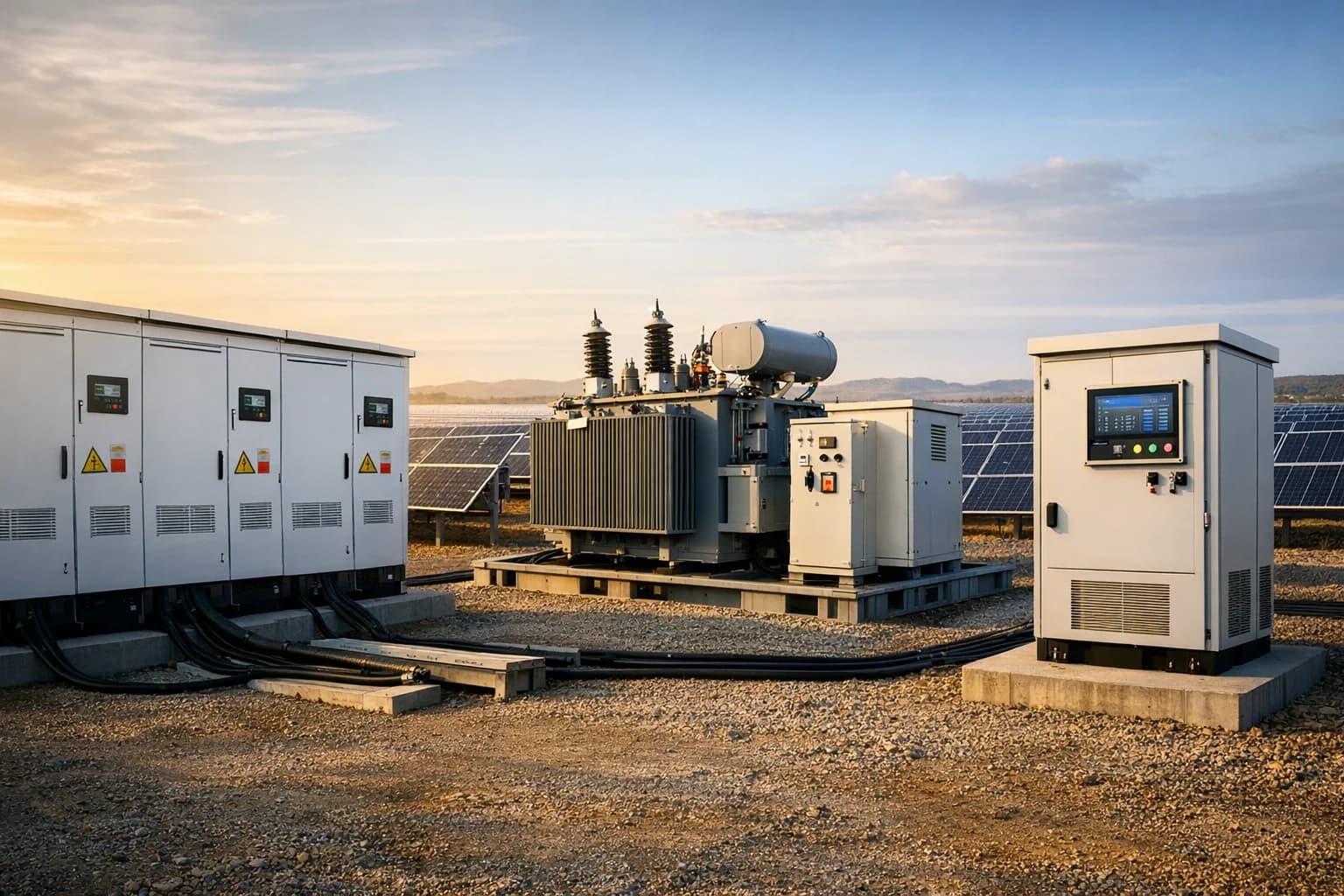
- SCADA streams from wind, solar, and storage assets.
- Weather and geospatial feeds with time-synchronized quality controls.
- Energy management systems for dispatch, bidding, and balancing context.
- Asset maintenance systems for failure mode and intervention planning.
- Commercial settlement data for value attribution and strategy tuning.
Model risk and governance requirements
- Define human override priorities for safety, compliance, and grid constraints.
- Monitor drift by season, weather anomalies, and asset aging patterns.
- Version dispatch policies with explicit risk envelope per market context.
- Run stress tests for communication loss and degraded telemetry scenarios.
Scale-up criteria before multi-site rollout
- Forecast and dispatch improvements sustained over multiple seasonal windows.
- No reliability regressions while autonomy and policy complexity increase.
- Control-room operators demonstrate consistent AI-assisted response quality.
- Portfolio economics improve after including model and integration operating cost.
Treat data quality, model lifecycle controls, and operator adoption as one integrated system; scaling only one layer usually destroys ROI.
Want to adapt this scenario to your factory?
Let's collaborate on data readiness, pilot selection, and ROI modeling.